
← Back to the main story · Part 1: 1971–1987
Companion story
Tangerine Dream: the fourth entity. Part 2: 1987 to today
For seventeen years Tangerine Dream had been built around Edgar Froese and Christopher Franke, with a third member who changed. After Franke left in 1987, Froese was the only original member. Over the next nearly thirty years he made the band with three partners in turn: an Austrian keyboard player, his own son and a young Berlin musician who became his successor. After his death the band went on without him, as a trio.
The duo
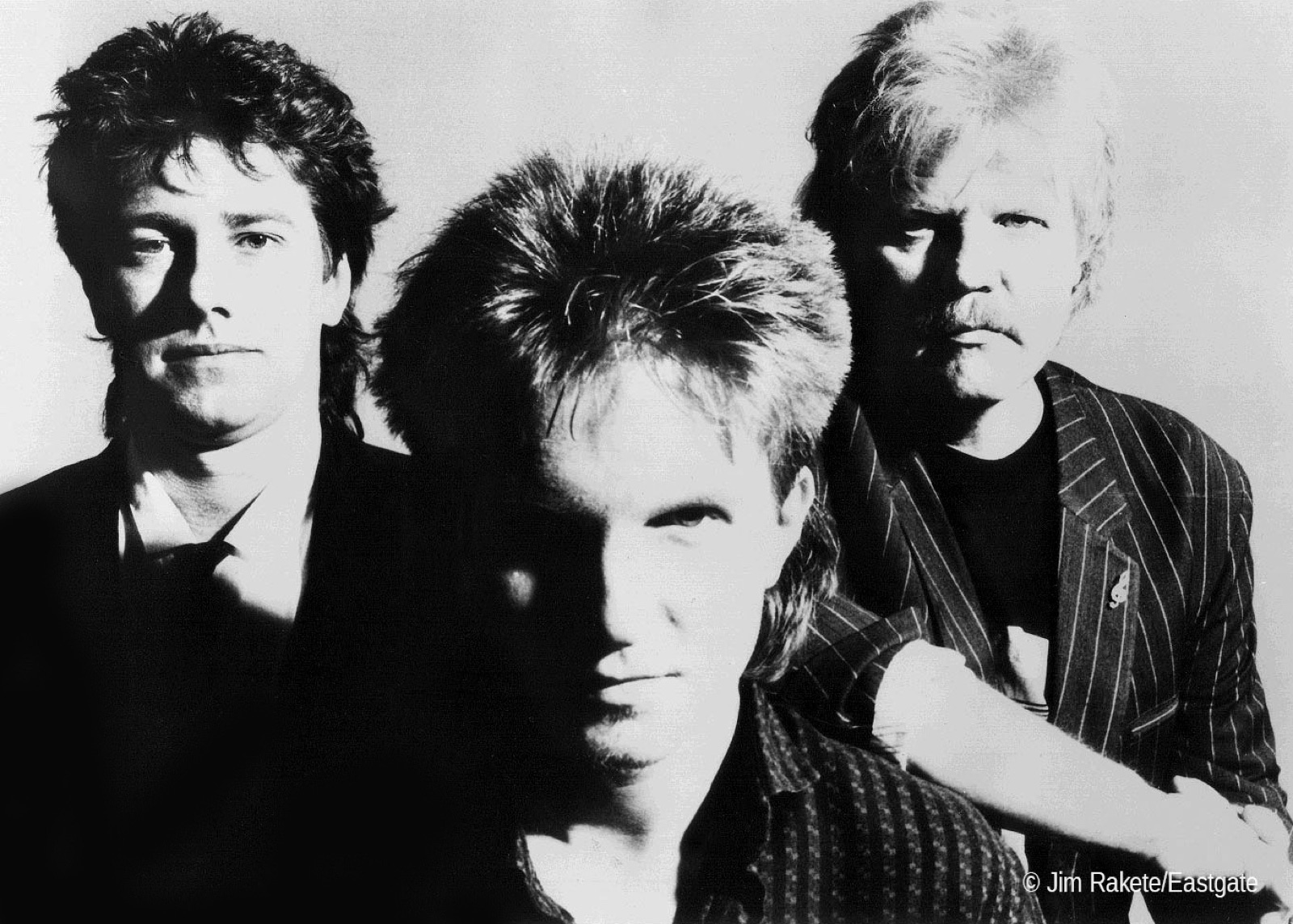
Froese asked Paul Haslinger, the young Austrian keyboard player, whether he wanted to go on working with Franke or with Tangerine Dream. Haslinger, who got on far better with Franke than Froese did, spoke to Franke first, then talked with Froese for several hours and chose the band. Froese wrote that Haslinger “behaved admirably, acting correctly and fairly with regard to all of the parties concerned”.
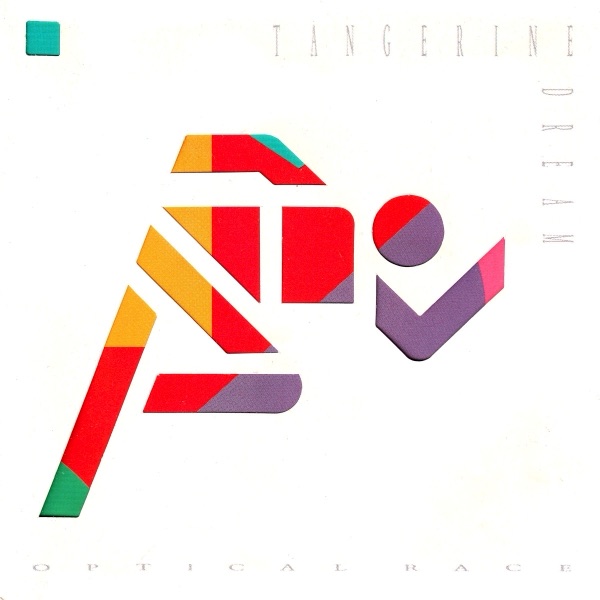
Froese built a new studio complex on the outskirts of Vienna, intended above all as a place for Haslinger to work and live. Then an old partner came back. In 1988 Peter Baumann, now running his own New York label, Private Music, approached Froese about working together again, about ten years after they had parted, and Tangerine Dream moved to his label. As a duo Froese and Haslinger made Optical Race (1988), producing it on an Atari computer, and Haslinger played all its drum sounds from the keyboard.
For the American tour that year they needed a third man, and Froese found the Berlin keyboard player Ralf Wadephul. After the rehearsals in Vienna Haslinger gave his verdict: “I wouldn’t marry Ralf, but I think he’ll do a good job on stage.” At those rehearsals Haslinger sat at his computer for six or seven hours at a stretch. Asked whether he was satisfied, he said satisfaction was for allotment gardeners: “My ears hear perfectly, but the equipment I listen to and on isn’t.” It was the band’s first tour played entirely with computers, and by then, Froese and Haslinger said, a concert was about seventy percent composed. Froese counted it one of the most important tours the band ever played.
Press ▶ in the player to start.
This video can’t be played here. It may be blocked where you are, or no longer available. Try it on YouTube ↗
Listen
Tangerine Dream, Optical Race (1988)
Listen for: the drum sounds, all played by Haslinger from a keyboard.
Full piece on YouTube ↗Playing loads this video from YouTube (Google); Google’s privacy policy applies.
Father and son
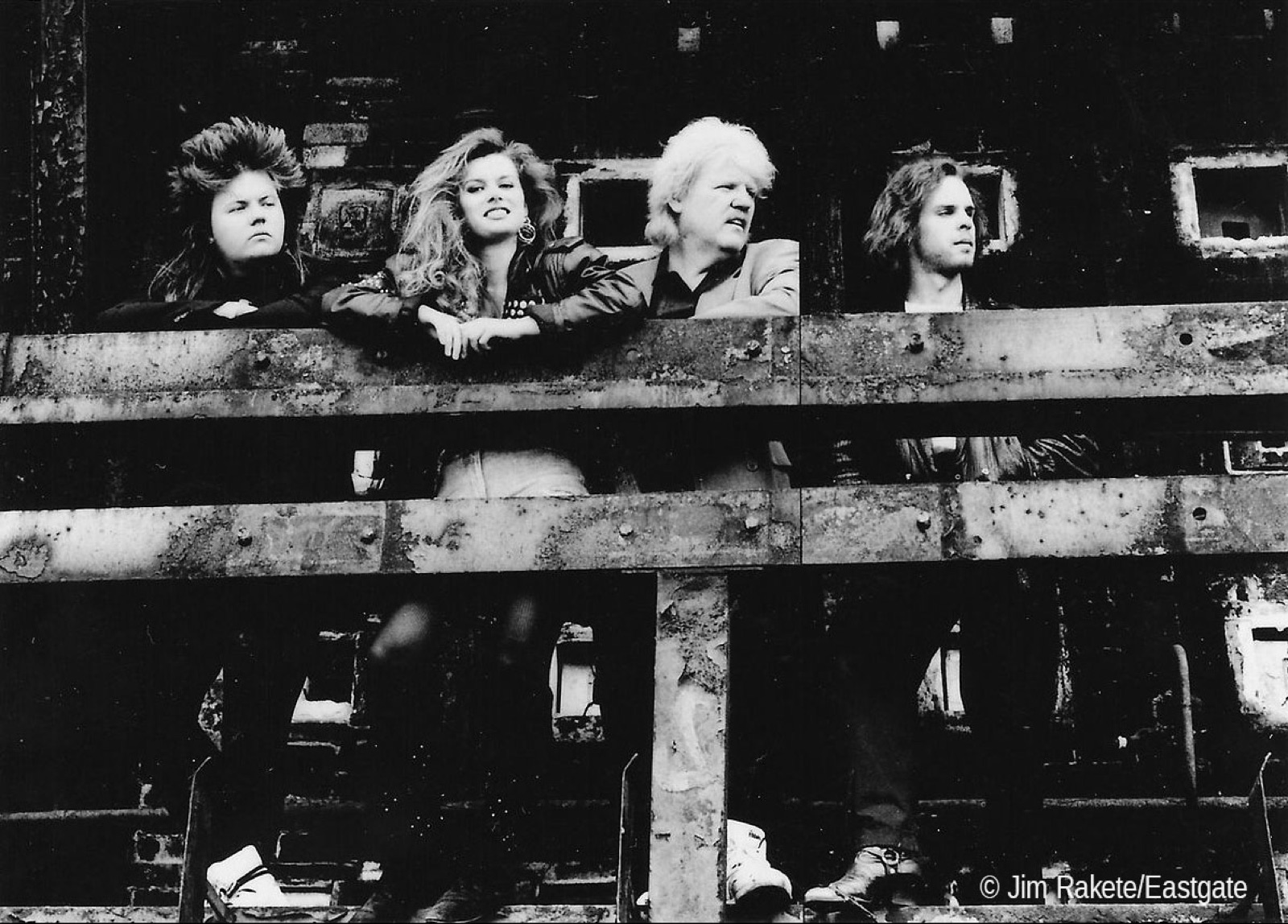
In February 1990, at the band’s first concert in East Berlin after the fall of the Wall, Froese’s son Jerome asked to come on and play a guitar solo. Haslinger worried that the band was becoming too much of a family affair. Froese later admitted that Haslinger’s instinct had been better than his own, but at the time he told his son it would be the whole concert or nothing. The concert went well. That December Haslinger left for Los Angeles; the band’s strategy, Froese wrote, was no longer to Haslinger’s liking. Haslinger never claimed a large share of the band. Tangerine Dream, he said, was “a project initiated and conceived by Edgar Froese: if there is a mastermind behind the whole thing, it’s him”, and it had been “a lucky chance for me to grow”.
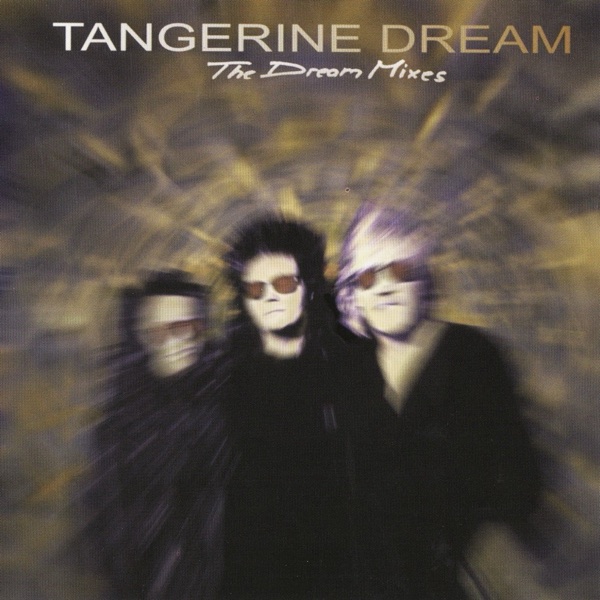
For the next sixteen years father and son were the core of Tangerine Dream. Jerome was a computer and synthesizer expert who brought rougher guitar sounds to the band, and on stage the two of them played guitar duets. The German press savaged their first album as a duo, though it was nominated for a Grammy. Jerome recalled his father’s reaction: “Edgar would say to me, ‘Don’t worry. We’ll do our thing.’” When the band was asked to work with the new generation of electronic acts, and his father turned most of them down, Jerome made The Dream Mixes (1995) on his own, remaking the band’s music in the styles of techno, breakbeat and trance. It sold very well, and his father gave him the series as his own.
Press ▶ in the player to start.
This video can’t be played here. It may be blocked where you are, or no longer available. Try it on YouTube ↗
Listen
Tangerine Dream, The Dream Mixes (1995)
Listen for: the band’s music remade as techno, breakbeat and trance.
Full piece on YouTube ↗Playing loads this video from YouTube (Google); Google’s privacy policy applies.
Froese had even thought, a few years before 1997, of handing the whole project over to his son and turning to other kinds of art. He was wary of the dance scene itself. In 1994 he told The Wire that he was interested in what DJs did but “astonished that they don’t go further than sampling and scratching”. In 1997 the band’s British label commissioned The Orb to remix one of its pieces, and father and son found the result so far from their music that it became one reason they left the label. By the late 1990s Froese had taken the band out of the record industry altogether, with a label of its own, TDI. Record companies, he told young musicians, were like prison guards.
The working relationship between father and son, Froese said in 2009, “shifted from being very harmonic and cool to very, very furious with horrifying fights about things we don’t like”, but “what I liked most about Jerome’s contribution is the way he very often turned things upside down.” Jerome remembered a perfectionist’s fight “for every element” against a father more interested in counting ideas than in every song: “Edgar would say, ‘No, the song is finished.’” After Monique Froese died in 2000, a rift opened between them, and in 2006 Jerome left the band to work on his own music. They worked together once more in 2013, when Froese took on the score for the video game Grand Theft Auto V and Jerome helped him from outside the band. A leftover track, “Final Movement”, was their last piece together. When Froese died, it was Jerome who announced it on the band’s page: “Life plays no encores.”
The apprentice
Years earlier, Froese had found the musician who would carry the band on. Thorsten Quaeschning got the job, he said later, partly because he used the same sequencer program as Froese, so that the two could share files. For a year and a half he sat beside Froese in the studio and learned the rules Froese had worked out over forty years: how to repeat and offset sequences, how to build tension before a release, which scales to use, and that a phrase of three notes repeated three times in half an hour can work like a melody.
For more than a decade he spent half of every year in a small house beside Froese’s near Vienna. He called Froese the best teacher he ever had, a mentor in life as well as music. Froese, he wrote, could also be “impatient, protective and very dominating”, but would change his mind after a thoughtful discussion. “He was probably not always very detailed about what he wanted, but he was very clear about what he didn’t want.” For the band’s literary albums, on James Joyce’s Finnegans Wake, Edgar Allan Poe and Franz Kafka’s The Castle, the two of them read the book first and then decided which parts each would turn into sound. In 2011 Froese made him musical director, and for Grand Theft Auto V the band wrote, by Quaeschning’s account, some thirty-five hours of music.
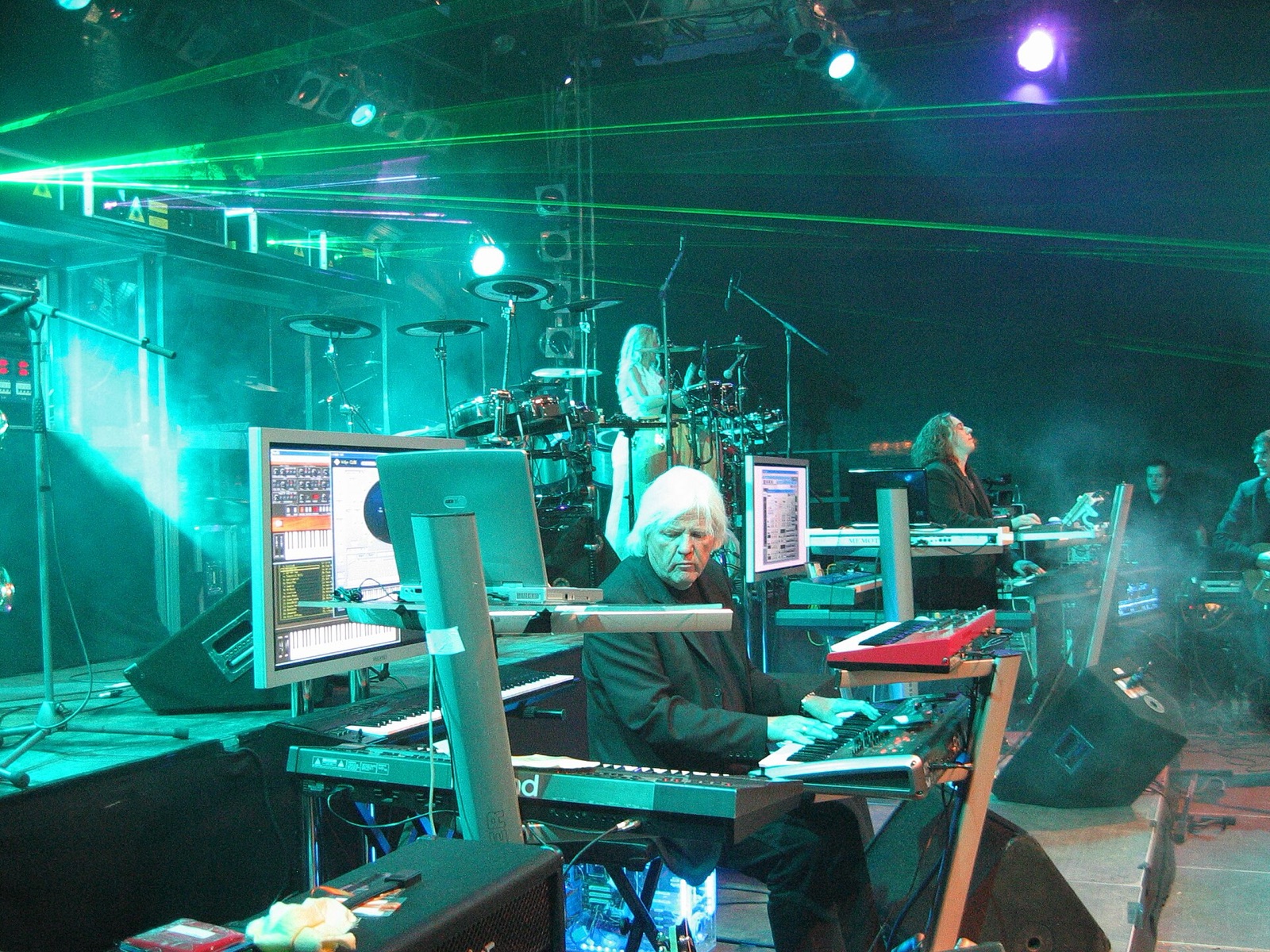
In 2014 Froese decided to take the band back to the sequencer music of its beginnings, without acoustic instruments, and brought in the synthesist Ulrich Schnauss after an audition at his house. In November the new line-up, with the violinist Hoshiko Yamane, went to Australia. At Melbourne Town Hall they played the score of Sorcerer live to the film, and because the print they had rehearsed with was shorter than the one projected, the last minutes had to be improvised on the spot. Those improvised minutes were the last music Froese played on stage. His last email to Quaeschning said he had bought new sound cards and would see him in Vienna the following week.
When Froese died in January 2015, Quaeschning, Yamane and Schnauss agreed with Froese’s widow, Bianca Froese-Acquaye, to carry on. “It was not our decision to move on,” Quaeschning said. “There was no one raising hands saying, ‘I’m going to do this.’” Froese had left Cubase arrangements, sketches and audio tracks for the new project, and Quaeschning wrote later that the musicians and Bianca “felt it was a natural process to continue the ‘Quantum’ project, all with Edgar’s blessing”. As he understood it, Froese had meant the philosophy of Tangerine Dream to be stronger than any of its members. Jerome Froese saw it differently: his father, he said, never wanted the band to continue without him.
The shop
The first outsider to work with the new band was an old insider. Peter Baumann met the trio in 2015 and worked with it on a few tracks, but, he said, “our musical direction and production process did not match well”: Quaeschning and Schnauss came from a new generation, and he was still grounded in his own musical history. The band decided to keep outsiders out.
In 2020 the pianist Paul Frick took Schnauss’s place. He is the only member who never met Froese. Quaeschning heard the three of them as complementary: himself strongest at the 1970s sequences, Frick at short rhythmic figures, and Yamane at melodies, which she often plays through pedals that turn her violin into Mellotron strings, choir or flute. They made Raum (2022) in a former barbershop in Berlin that the band calls “the shop”, and for the first time the three composed together in one room, bringing the experience of their live sessions into the studio. Froese’s archive was in the room too. They drew on his arrangements and tapes, and new software let them fit his melodies to their music as if he had written them for it.
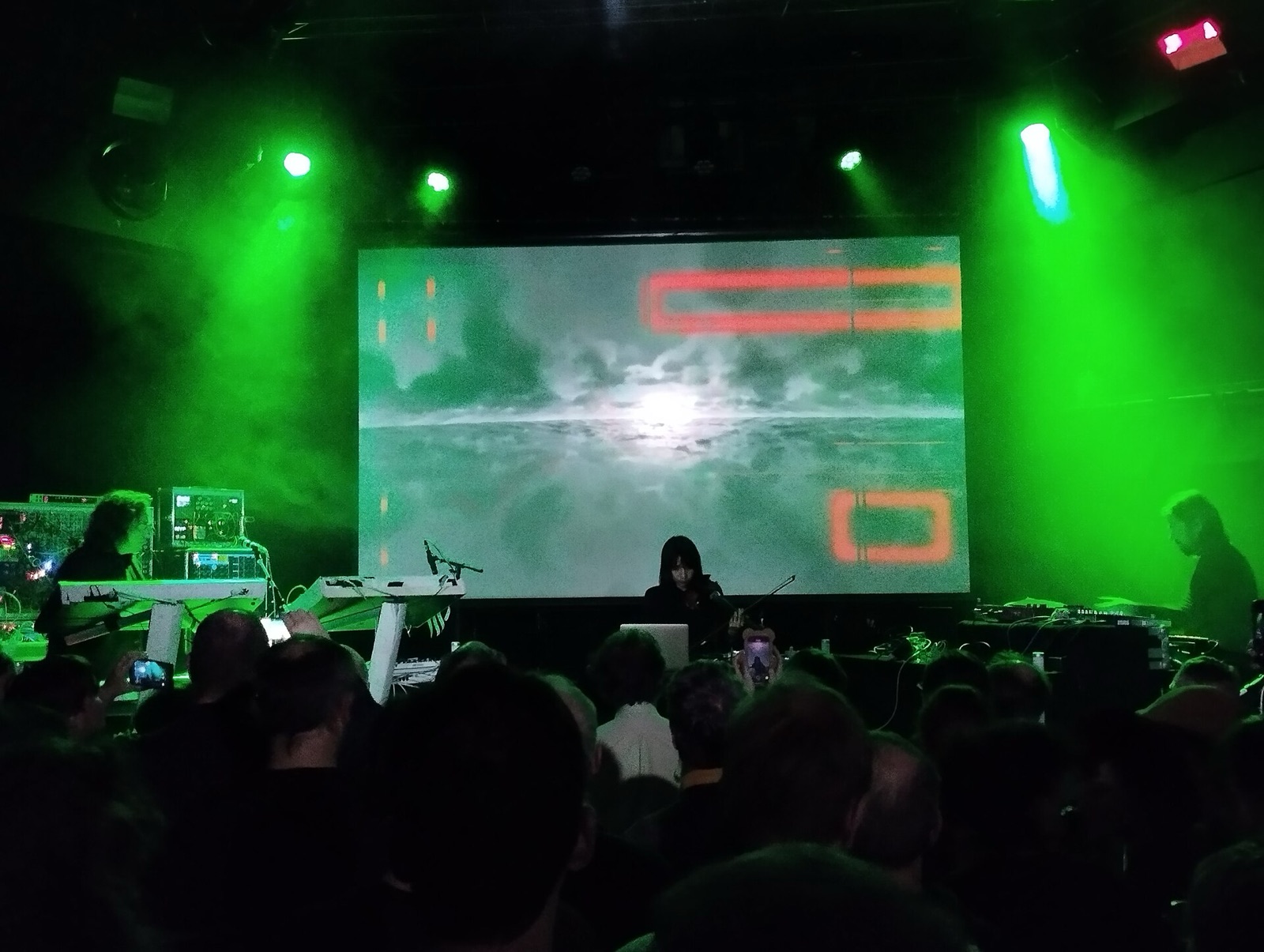
Every Tangerine Dream concert now ends with a “Session”, made up on the spot, a practice the band traces back to the improvised ending in Melbourne. Quaeschning doesn’t like to call it improvisation. The band agrees on a tempo and a key and composes in real time, within the scales and rules Froese laid down. In the 1970s the trio of Froese, Franke and Baumann had met once a month to feel each other’s energy; this band makes music up together on stage every night. “The idea is not to be some kind of musical museum,” Quaeschning said, “just try to find the next chord progression.”
Back to the main storySection 10, “A change of cosmic address”, after Raum ←