
Companion story
Tangerine Dream: the fourth entity. Part 1: 1971–1987
Peter Baumann met Christopher Franke at an Emerson, Lake & Palmer concert in Berlin, and Franke invited him to a rehearsal with Edgar Froese. Baumann was eighteen. His only instrument was a Farfisa organ, and by his own account he could hardly play it: “I knew the difference between white and black keys, but that was about it.” Froese told him to start playing anyway. Baumann rattled the reverb spring attached to the organ, which made “an enormous, thunderous noise”, and kept it up for twenty minutes. Then Froese said: “Yeah, that was very cool. Let’s go and play a concert.”
Froese chose the band’s members, and he let them go. He founded the band in 1967 and led it for almost fifty years, and by 1994 he counted thirty-four musicians who had passed through it. Around him it was usually a trio, and each trio worked differently. What they shared was a leader who made the decisions and, for Baumann at least, a music that belonged to none of them. “In Tangerine Dream, I never felt as though it was ever about any one individual,” Baumann said. “Music was the main focus. So the music and atmosphere that it created became the fourth entity. You could feel that it was beyond yourself.”
The classic trio
With Baumann, who joined in 1971, the band had a stable line-up for the first time. “When Peter joined,” Franke said, “the group became more stabilised, and seriously started working on keyboards and synthesizers.” For six years, from Zeit to Encore, it was Froese, Franke and Baumann.
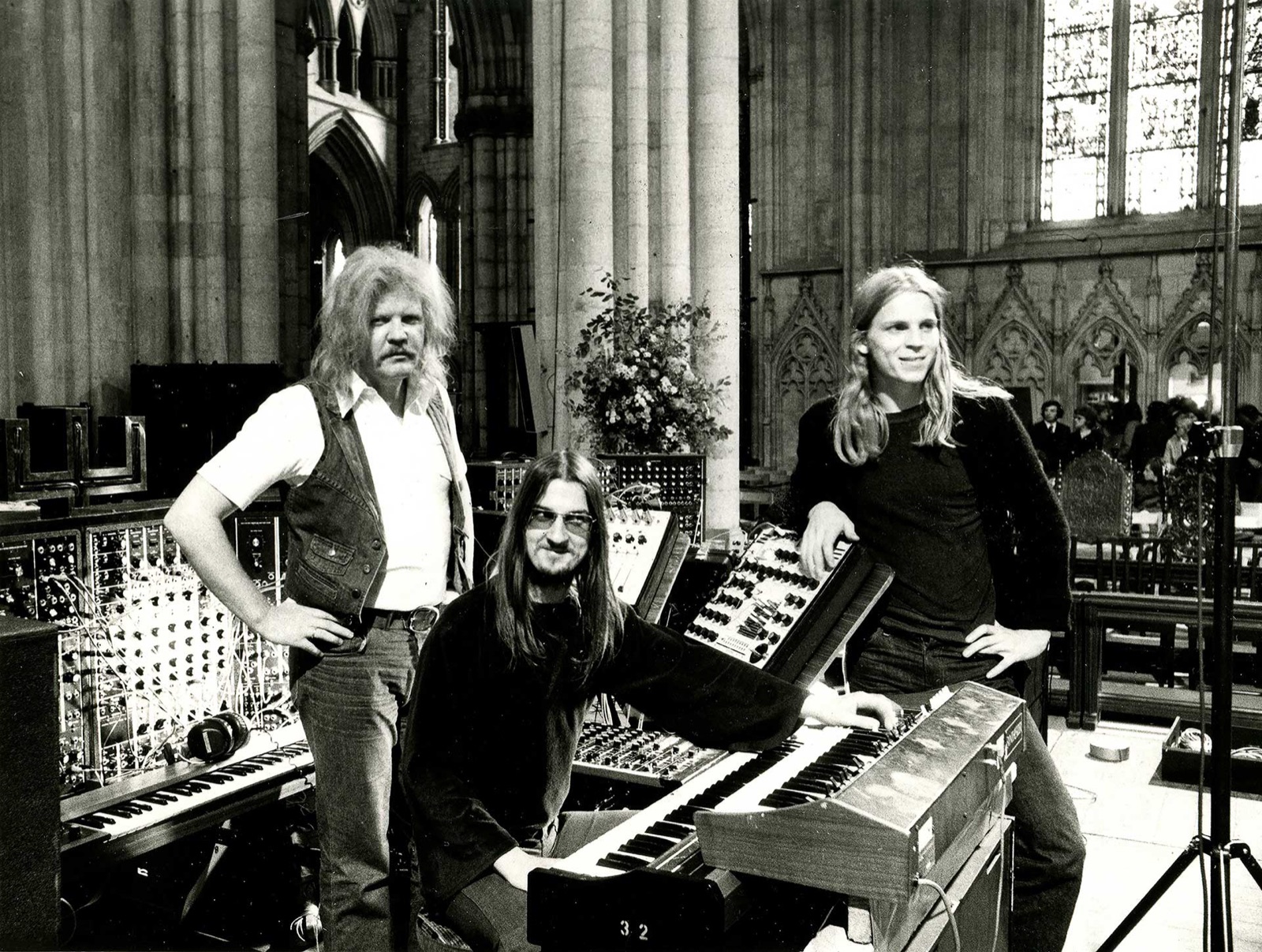
They did not rehearse in the usual sense. Froese said they met about once a month to understand each other’s energy, and they improvised on prepared sequencer patterns. In the studio, Franke said, they worked by trial and error, more like developers than composers. They recorded fragments and decided on the spot whether to keep them, and nobody wrote music, learned it and played it. Baumann went further. The band, he said, never composed anything; it was “always a process of discovery”. “If you have three individuals who are adventurous and experimenting, then the accidents just multiply. We were always on the lookout for anything that made noise. I was crushing glasses against the wall and recording that before the synthesiser came along.” Any melody that sounded conventional was changed. “We’d record things like a mattress falling onto a cymbal, then turn it backwards and put it through a phaser.”
Each man had his territory. Franke, a drummer by training, was the sequencer specialist, the one most responsible for the band’s trademark pulse; he had practiced on the big Moog night after night, and he treated the synthesizer and the sequencer as rhythm instruments. Baumann played keyboards, flute and Mellotron and brought melodies and a more rock-like sense of structure. On Phaedra he did most of the mixing, and by his own account it was he who started recording the title track, adding reverb and delays to Franke’s sequence; Froese remembered starting the tape himself. Either way, Franke didn’t know he was being recorded. Froese played guitar, Mellotron, organ and bass. He never thought of himself as a keyboard player: the piano was his sketchbook in the studio, and the guitar his voice on stage.
Press ▶ in the player to start.
This video can’t be played here. It may be blocked where you are, or no longer available. Try it on YouTube ↗
Listen
Tangerine Dream, “Phaedra” (1974)
Listen for: Franke’s running sequence and the reverb and delays Baumann laid over it while the tape rolled.
Full piece on YouTube ↗Playing loads this video from YouTube (Google); Google’s privacy policy applies.
Froese was also the businessman. He had always signed the band’s contracts, he wrote, and so carried “one hundred percent of the responsibility” himself. In 1973 he led the band out of its old record deal and negotiated its first big contract, with Richard Branson’s Virgin. For nearly thirty years his wife, Monique, was part of the band’s work too. She took most of the photographs the world has of the band in the 1970s and 1980s, and painted or designed many of its covers, from Stratosfear to Tangram. On Phaedra, Froese said, she turned the knobs on the phasing device while he recorded “Mysterious Semblance at the Strand of Nightmares” in one take.
The trio was not a comfortable one. Froese wrote that Baumann was never satisfied with the way Franke used sequences and sounds, and that Franke answered the criticism with sarcasm; one reviewer saw Franke as the mediator between the other two. In January 1975, just before the band left for Australia, Baumann disappeared, and Michael Hoenig of Agitation Free had to go on tour in his place. Then a telegram came from Baumann’s father: “Son reappeared – Stop – Was on holiday in Afghanistan – Stop – He is fine, he will meet you at the concert in London.” He had driven from Berlin to Kabul. He was back in the band soon afterward, because, Froese said, building a new understanding with Hoenig would have taken too long. But the episode cost him standing, and Franke often alluded to it.
The working relationship, Baumann said later, was “very disruptive”: Froese was fair and patient but could be very intense, and Franke often mediated. Baumann also had his own album in hand, and Froese felt that Baumann’s attention to it strained the European tour of 1976.
Early in 1977 Baumann said that after six years it was impossible for the three of them to get any closer than they already were. The band, he explained, was “not like a marriage in conventional terms”. The last concert the three of them played together was in Boulder, Colorado, in July 1977, and in October he left. Baumann said in 1978 that the band had lost contact with its audience. Much later he gave a simpler reason: “It just felt like it wasn’t as much fun any more. And I think Edgar wanted to go in some other direction.” Froese called it “one of the most difficult decisions that I made in those days, as I highly respected Baumann as human being and musician”. Franke admired Baumann’s talent but not his ambitions: “Peter’s speciality was in conceiving the music – we discussed it, and then we played it.”
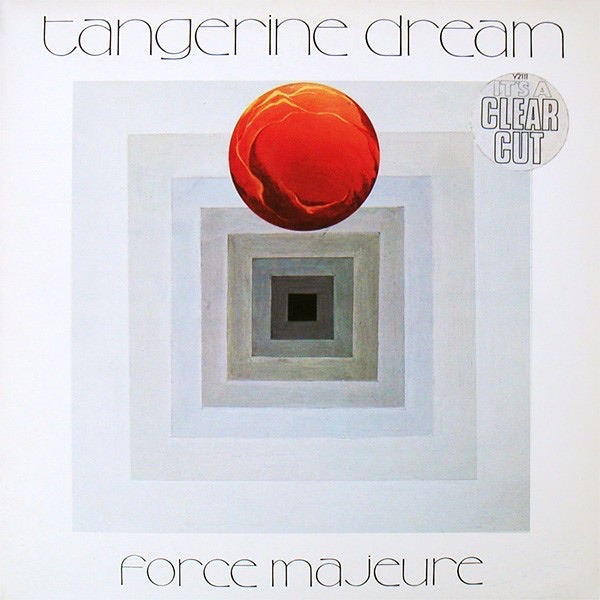
Froese and Franke carried on, but not smoothly. After the 1978 tour, Froese wrote, he had “unforeseeable problems” with Franke that he wouldn’t describe; lawyers became involved, and Franke’s “(first) departure” lasted nearly six months. After “an intense confrontation” and some discreet discussions they buried the hatchet and made Force Majeure (1979) together, with the drummer Klaus Krüger. “It was a new phase, more structured,” Franke said.
The organist from the theater
Froese found the next member at the Schaubühne theater in Berlin, where Johannes Schmoelling was the sound engineer on a Robert Wilson production. Froese had gone there hoping Wilson might commission a score, and for several days he watched the engineer at work, admiring how sensitively he handled the theater’s acoustics. In the cafeteria Schmoelling told him: “It may sound funny to you, but I am actually a church organist.” He warned Froese that he hardly knew Tangerine Dream’s music and didn’t like to hog the limelight. In the summer of 1979 Froese invited him to an audition in his studio, and Schmoelling improvised on the Steinway grand for nearly twenty minutes. He was offered a place.
The first months were hard. “I have always thought that making music always has something to do with having fun,” Schmoelling told the others. “When I’m here, sometimes I feel as though I’m on a parade ground at a military academy.” Froese admitted he was not entirely wrong. Franke was a pragmatist, and Froese himself, with the business on his shoulders, was inclined to “programmed precision”. Schmoelling distrusted the machines, doubting that “circuit board boxes” could carry real dynamic playing. Franke sat with him, often until the early hours, and pointed out that Schmoelling’s organ pedals had been playing a kind of manual bass sequence all along.
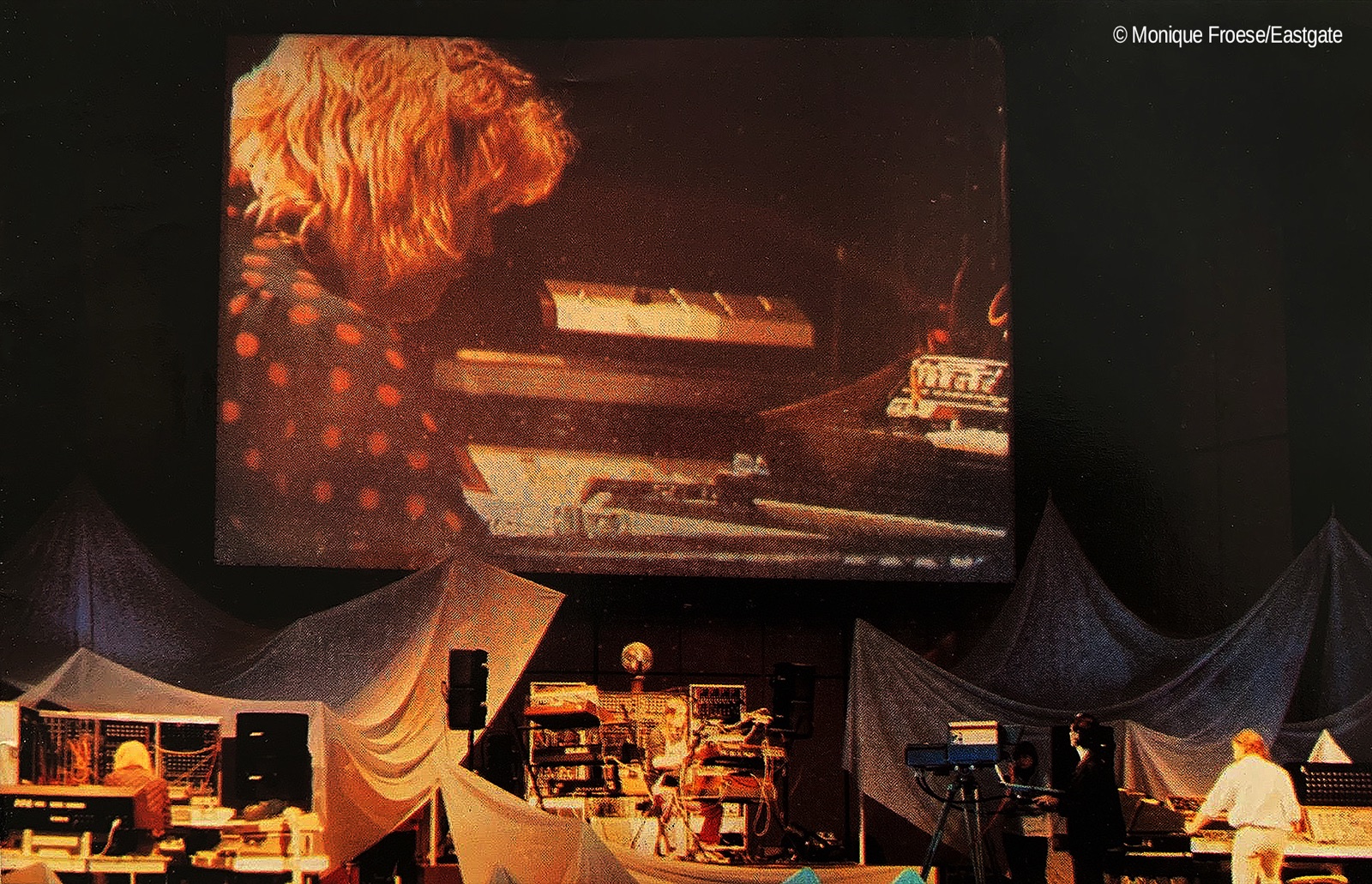
The new trio’s first concert, in East Berlin in January 1980, began with a piano improvisation by Schmoelling. He remembered the evening as two-thirds improvisation, after only a month of rehearsal: “Music as an adventure – you can fail but at the same time you can achieve something big.” He also changed the music. Before he arrived, he said, the band’s music had been built on sequencer loops, “more or less in one key, with few harmony changes and long sessions of improvisation”; with him came jazz-oriented chords, composed melodies and synthesizer solos closer to rock. It took the band nearly three years, Froese said, to reach the understanding with him that it had had with Baumann.
Press ▶ in the player to start.
This video can’t be played here. It may be blocked where you are, or no longer available. Try it on YouTube ↗
Listen
Tangerine Dream, Quichotte (1980), the opening
Listen for: Schmoelling’s piano improvisation, the first sound of the new trio.
Full piece on YouTube ↗Playing loads this video from YouTube (Google); Google’s privacy policy applies.
In 1985 each member had a 24-track studio of his own in Berlin. When one of them had an idea, Franke explained that year, they phoned each other and met in one studio “until the piece is finished”. That year Schmoelling left. He wanted to concentrate on his own work, and working in a band, he said, meant compromises, “and these compromises do occasionally lack in quality”. In Froese’s telling the break came over equipment: Schmoelling insisted on taking the new PPG Waveterm sampler on a tour of some forty concerts, Froese and Franke were sure its circuit boards wouldn’t survive the road, and Froese wrote the letter releasing him. In later years Froese called him one of the most talented people in the band’s long history, “emotionally very gifted and the most serious worker” he had met in years, though one who had also given them “sufficient grounds to despair”.
A Mozart sonata
In the autumn of 1985 the band had British and American tours booked and no third member. Two weeks before Christmas, at its studio in the countryside near Vienna, a violinist who had applied to be the band’s tour manager brought along a friend, introducing him as “an Austrian funk keyboardist par excellence”. Froese was not impressed. Then, on the way to tea, the young man, Paul Haslinger, sat down at the grand piano and played a Mozart sonata, “and not one of the easier ones”. “At that moment it became clear to me that a new TD chapter was beginning,” Froese wrote.
There was one diplomatic problem, his funk. “Less is more,” Froese told him, and advised him to pack all his old patterns into a box “and sink them down to the deepest place of your personal ocean”. Haslinger moved to Berlin, mastered the band’s computers quickly, and treated the sequencer as an instrument rather than a technical device. The work was relentless. After the 1986 tour the three of them stayed in Los Angeles and scored a film in a hotel suite, working around the clock in shifts. After a night on the studio sofa Haslinger told Froese that when they first met, “you told me you were looking for a keyboard player. You didn’t mention anything about being a slave on the plantation fields of the TD music and entertainment farm.” Froese admitted that the remark stayed with him, and made him wonder whether he sometimes demanded too much of his colleagues.
Franke felt the same strain. After the 1986 tour he proposed that the whole band take a long creative break. “We had worked and worked, like mice on a wheel — no end!” Froese liked the idea, Franke said, then changed his mind as new business kept arriving. Franke saw their roles as complementary, himself on the music and Froese on running a band that was “more like a company”, and the differences grew from there. The band, he said, had become “like a car with three wheels and each wheel had its own steering wheel”.
Froese’s account is different. In his telling, Franke had been developing business ideas of his own and doing less of the band’s work. Franke’s last concert was in front of the Reichstag on 1 August 1987, for Berlin’s 750th anniversary, and Froese hadn’t known where Franke was beforehand. Franke arrived four hours before the show. Froese turned to his wife and said: “Enjoy this concert, it’s going to be the last one with this formation.” After seventeen years, the partnership at the center of the band was over. Froese called the separation “a hugely liberating experience” that could not hide a sense of loss, and later granted that Franke’s technical abilities had always served the band well. Their characters, he wrote, were “simply too different”.
Froese was now the only original member left in the band, and the young Austrian who had played beside both men had to decide which of them to follow.
Back to the main storySection 6, “The fossil verdict”, after Franke’s departure ←