
← Back to the main story · Part 1: Paris, 1969–1982
Companion story
Jean-Michel Jarre, fellow traveler. Part 2: the same room, 2014–2026
When Jean-Michel Jarre drove out to Edgar Froese’s studio near Vienna in the autumn of 2014, the two men had never really met. For nearly forty years they had been named together, as pioneers of the same music, and had kept their distance. What brought Jarre there was a record he had been planning for years.
A family
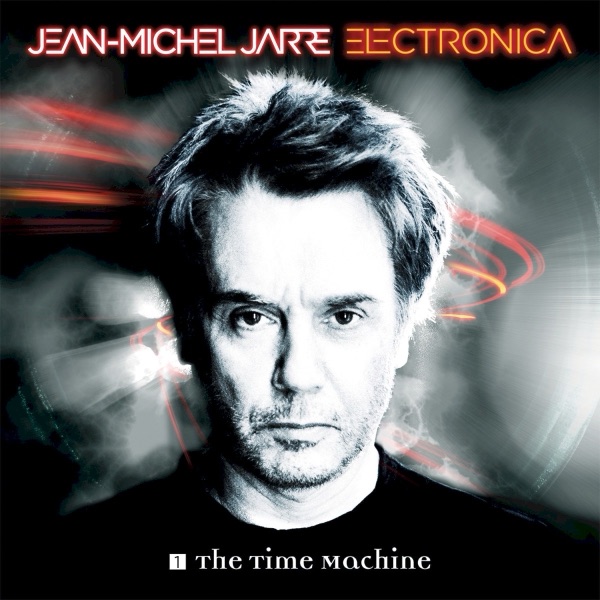
The record had begun in a dark stretch, Jarre said, in which he lost both his parents and his publisher, Francis Dreyfus, the man who had released Oxygène when nearly every other label turned it down. Electronic musicians, he said, work alone in their studios like writers or painters in an atelier, and he wanted to open the door of that solitary craft. In the sleeve notes he wrote that electronic music “has a family, a legacy and a future.”
His family, as he drew it, was made of artists who had inspired him over four decades and who each had an instantly recognizable sound: Moby, Massive Attack, Air, Vince Clarke, Gary Numan, Pete Townshend, Hans Zimmer, John Carpenter, and younger producers such as Boys Noize and M83. Tangerine Dream, he said, was very high on his wish list. He wanted Boys Noize, a German act, to open the album, because electronic music was rooted most strongly in Germany and France.
He set himself two rules. He would meet every collaborator face to face, in their studio or his, instead of mailing files to people he never saw. And every piece would begin with a demo he wrote from his own idea of that artist’s music, with room left for the other to answer. So he traveled: to Berlin for Boys Noize, to Los Angeles for Moby and Laurie Anderson, and to the countryside near Vienna for Tangerine Dream. The project took almost five years and produced more than two hours of music, released as two albums, Electronica 1: The Time Machine (2015) and Electronica 2: The Heart of Noise (2016).
Zero Gravity
At Froese’s studio the band welcomed Jarre with its own version of Oxygène, the record that had made him famous. Jarre asked for something else. He wanted a piece that was purely electronic, with synthesizers, analog or digital. It was the band’s synthesizer years that interested him, he said, more than its rock years with saxophone and guitars. He had brought a demo built on sequences, and the aim, as he put it later, was to interweave their DNA, with a poetic and mathematical approach that he thought they shared.
They spent the day together working on it, and a few days later Froese sent back the finished piece. Jarre found it close to what he had imagined, and noticed that the parts that sound most like Tangerine Dream were ones he had composed and produced, while much of what sounds like Jarre was made by the band. Thorsten Quaeschning, who worked on it with Froese, was struck by how little Jarre needed: he himself stacked hundreds of tracks to hide the one good sound, while Jarre built his magic from three instruments, six at most.
Press ▶ in the player to start.
This video can’t be played here. It may be blocked where you are, or no longer available. Try it on YouTube ↗
Listen
Jean-Michel Jarre and Tangerine Dream, “Zero Gravity” (2015)
Listen for: which sequences sound like Jarre and which like Tangerine Dream, and the way the two trade places.
Full piece on YouTube ↗Playing loads this video from YouTube (Google); Google’s privacy policy applies.
Weeks later, only a few days before he died, Froese sent Jarre a message about it: “Everything starts at ‘Zero’ and returns to ‘Zero’ after a longer or shorter cycle.” He died in Vienna on 20 January 2015. Jarre called “Zero Gravity” the last piece Tangerine Dream made with Froese as its soul, and dedicated the whole Electronica project to him.
Jarre made one claim for the mix of generations on the album. Played to people who knew nothing about the artists, he said, “Zero Gravity” and “Immortals”, his track with the duo Fuck Buttons, could not be sorted into the work of musicians in their sixties and in their twenties. Tangerine Dream itself was by then a band of several generations: Froese had brought in Quaeschning, born in the 1970s, who led the band that carried on after Froese’s death.
Back in the charts
The public took to Electronica. It brought Jarre a Grammy nomination for best dance/electronic album, the two volumes were hits across Europe, and together they took him into the British Top 10 for the first time in twenty-five years. Mojo called the first volume an “unqualified triumph”; other reviewers found it a mixed bag. The pieces most often praised were those where Jarre’s style met a partner with a strong style of its own.
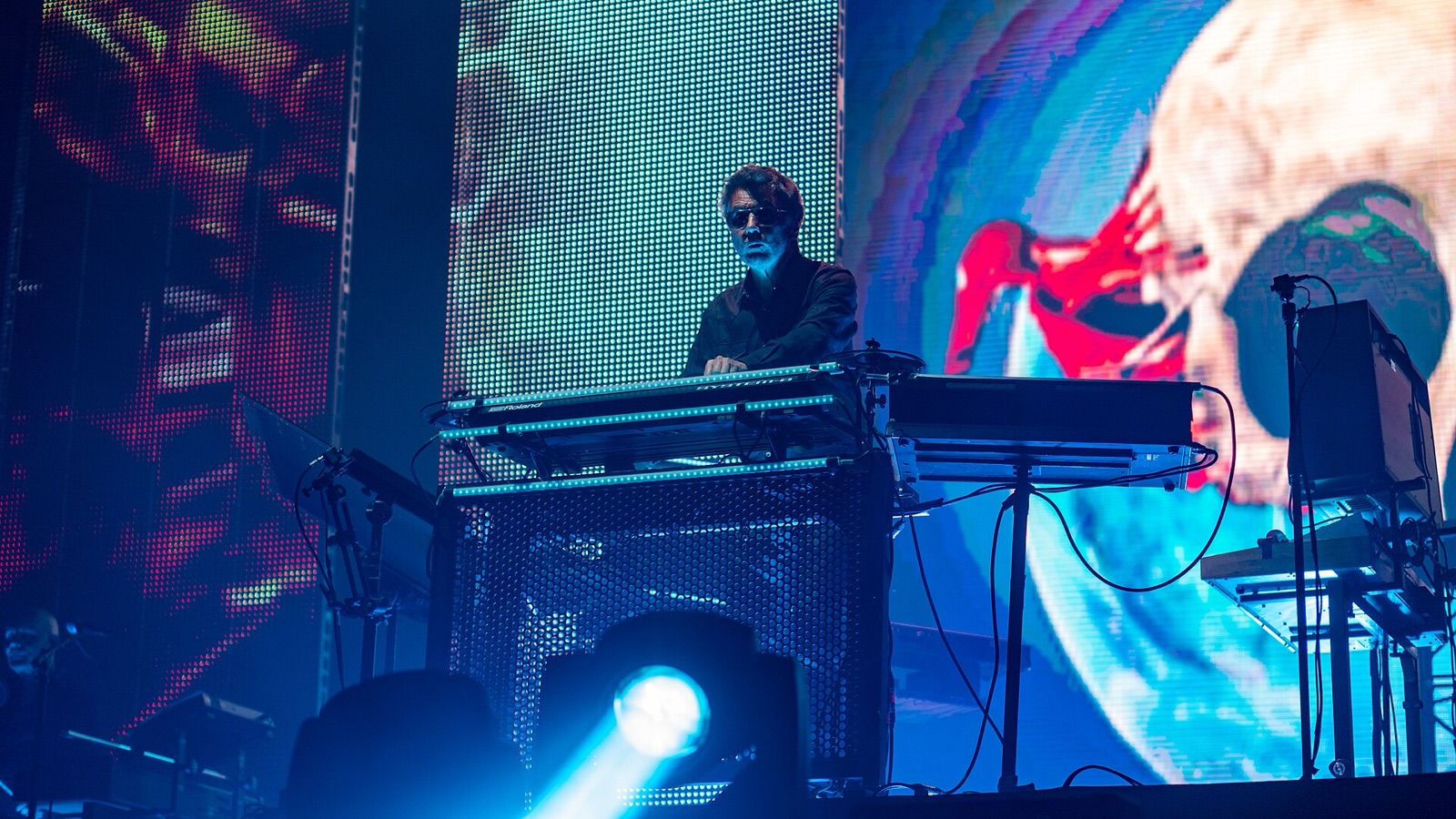
He took the music on the road from 2016, on his first tour of North America, with a show built to give 3D visuals without glasses. In 2017 he played on a floating stage at Masada, by the Dead Sea, to draw attention to the shrinking of the lake, and in 2018 he headlined two nights at the Coachella festival. He also appeared among the musicians who speak about Tangerine Dream in Revolution of Sound (2017), the documentary on the band.
Oxygène again
He had not planned a third Oxygène. During the Electronica sessions he wrote a piece that didn’t fit with the others, kept the idea, and used his record company’s wish for a fortieth-anniversary release as a deadline. Oxygène 3 (2016) was made the way the first had been, in six weeks, in a studio with minimal equipment, after the long planning and travel of Electronica. He didn’t listen to the first two Oxygène records beforehand. He kept the idea of a suite with sunny and dark moods, but none of the melodies, and numbered the seven new pieces as parts 14 to 20. Reviewers found it pleasant and light, and singled out the closing “Part 20” as the most substantial.
Press ▶ in the player to start.
This video can’t be played here. It may be blocked where you are, or no longer available. Try it on YouTube ↗
Listen
Jean-Michel Jarre, “Oxygène (Part 20)” (2016)
Listen for: the closing piece of the seven, which reviewers single out as the most substantial.
Full piece on YouTube ↗Playing loads this video from YouTube (Google); Google’s privacy policy applies.
Équinoxe Infinity (2018) returned to his second album in the same spirit. He compared it to the sequel of a film, two stories in the same world, and for the first time started from the artwork. Michel Granger’s cover for Équinoxe shows watchers with binoculars, which Jarre took to stand for technology observing humankind. He commissioned two new covers, one of people at peace with nature and machines and one of fear and machine takeover, and made the album as the soundtrack to both.
Virtual stages
The man who had taken electronic music out of the concert hall and into the open air found another stage in 2020. In June that year, as the music scene struggled through the crisis, he played a concert live from his studio while his avatar performed in a virtual world. On New Year’s Eve 2020 he gave Welcome to the Other Side, a fifty-minute show in which he played live from a studio near Notre-Dame while his avatar played inside a virtual Notre-Dame. It drew more than seventy-five million viewers, by the official count, across virtual-reality platforms, television and social media, and it mixed pieces from Electronica with new versions of Oxygène and Équinoxe. He went on staging concerts in virtual reality, among them one in the Hall of Mirrors at Versailles on Christmas Day 2023. There were real ones too: a free concert in Bratislava in 2024 for a crowd estimated at over 100,000, and the closing ceremony of the Paris Paralympics that September.
Back to the laboratory
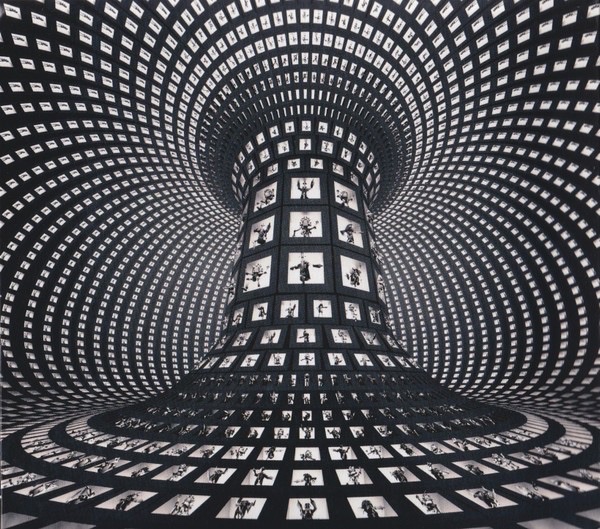
His most adventurous late record went back to where he began. In 1969 he had studied at Pierre Schaeffer’s Groupe de Recherches Musicales, where one of his teachers was Pierre Henry, the pioneer of musique concrète. Henry died in 2017, before the two could work together, but he had recorded sounds for the project, and his widow passed them to Jarre, who used some of them as a starting point. Oxymore (2022) is made in the manner of musique concrète, with acoustic and electronic sounds merged until it is hard to tell sampled from synthesized. Jarre recorded acoustic sources with contact microphones, among them a waterphone, a thunder drum and an ocean drum, and used few analog synthesizers. It was the opposite route from Oxygène. He mixed it for three-dimensional sound in an experimental studio at Radio France with twenty-nine loudspeakers, in the building where he had first studied. The Quietus found it more inventive than most synthesizer records of its time, darker and denser than Oxygène.
Press ▶ in the player to start.
This video can’t be played here. It may be blocked where you are, or no longer available. Try it on YouTube ↗
Listen
Jean-Michel Jarre, Oxymore (2022)
Listen for: sounds that could be acoustic or electronic, in the tradition of the radio laboratory where Jarre started.
Full piece on YouTube ↗Playing loads this video from YouTube (Google); Google’s privacy policy applies.
Fifty years
In 2026, the fiftieth year of Oxygène, Jarre issued the album again from a new remaster of the original tapes, which he called “the most true to what I originally created in 1976”. The same year Tangerine Dream released its Barbican concert of Phaedra, played for that album’s fiftieth anniversary.
Jarre had become an elder of the music, one who still drew younger generations to him. A French interviewer noted that Massive Attack, Moby and Carpenter, among others, had accepted his invitation to Electronica as a sign of gratitude toward him. He said that an English-speaking scene saw him as a “godfather” of electronic music, a title he found amusing. Later he spoke of a shared beginning. Electronic music, he said, “started in our countries, in France and Germany”, and Tangerine Dream, “even more than anybody else”, stood for the link between technology and classical music. The young man who had left Schaeffer’s laboratory to find an audience, and the band that had begun in Berlin’s cellar clubs, had met in the same room and made one piece of music together.
Back to the main storySection 10, “A change of cosmic address”, after “Zero Gravity” ←