
Companion story
Kraftwerk and the Düsseldorf School
On two nights in February 1973, the Paris youth magazine Actuel put five German bands on the stage of the Théâtre de l’Ouest Parisien. On the first night, 14 February, Kraftwerk played as a duo, with Guru Guru. On the second, Tangerine Dream, Ash Ra Tempel and Klaus Schulze played, Schulze appearing as a soloist for the first time. The hall was sold out, with nearly fifteen hundred listeners each night. Within a few years Kraftwerk and the Berliners of the second night would stand for two ideas of electronic music, named after two cities: Düsseldorf and Berlin.
Two cities, two names
The musicians themselves thought in cities. In 1992 Ralf Hütter of Kraftwerk named Cologne for Can, Munich for other bands and Berlin for Tangerine Dream: “it was all happening with different aspects coming from the different cities.” The bands met at festivals and knew of each other, he said, but Kraftwerk came clearly from the Düsseldorf scene. Schulze, in 1988, listed the same cities, with Kraftwerk in Düsseldorf and Tangerine Dream in Berlin.
Writers drew the line early. In 1979 the German magazine Sounds sent a reporter, Ingeborg Schober, to the Rhine and Ruhr, an industrial region that had produced, in her view, a style of its own, a headstrong counterpart to Berlin’s electronics: konkret statt kosmisch, concrete rather than cosmic. A German rock handbook of 1980, Rock in den 70ern, described the Berlin groups first, with their sequencers and their improvisations of fifteen to twenty minutes on record and thirty to sixty in concert. Then it turned to Düsseldorf, where, it said, electronic music of equal originality and success had been made since 1970, different from Berlin’s in several ways. Kraftwerk had stressed rhythm from the start, with a sharp, hammering beat, and avoided long developments.
The handbook didn’t call the Düsseldorf groups a school, and a scholarly study of the period says the name wasn’t in circulation in the 1970s. It is now. German Wikipedia has an article on the Düsseldorf School of electronic music, which calls it, with the Berlin School, one of the two main styles of German electronic music, and its article on Kraftwerk calls the band an essential co-founder of it. Rudi Esch’s oral history of the city’s music, Electri_City, appeared in German in 2014 as Elektronische Musik aus Düsseldorf; its English edition of 2016 is subtitled The Düsseldorf School of Electronic Music.
There is dissent. Deutschlandfunk said in 2022 that no common term was ever established for the Düsseldorf bands of the mid-1970s: “Eine Düsseldorfer Schule gibt es nicht”, there is no Düsseldorf School, because the bands were too different. The writer Jan Reetze calls the split between Berlin and Düsseldorf “a vastly artificial separation”, though his book still gives the Düsseldorf bands a chapter under that name. Like the Berlin School, the Düsseldorf School is a name given afterward, by others; the musicians chose neither.
The art academy and the empty room
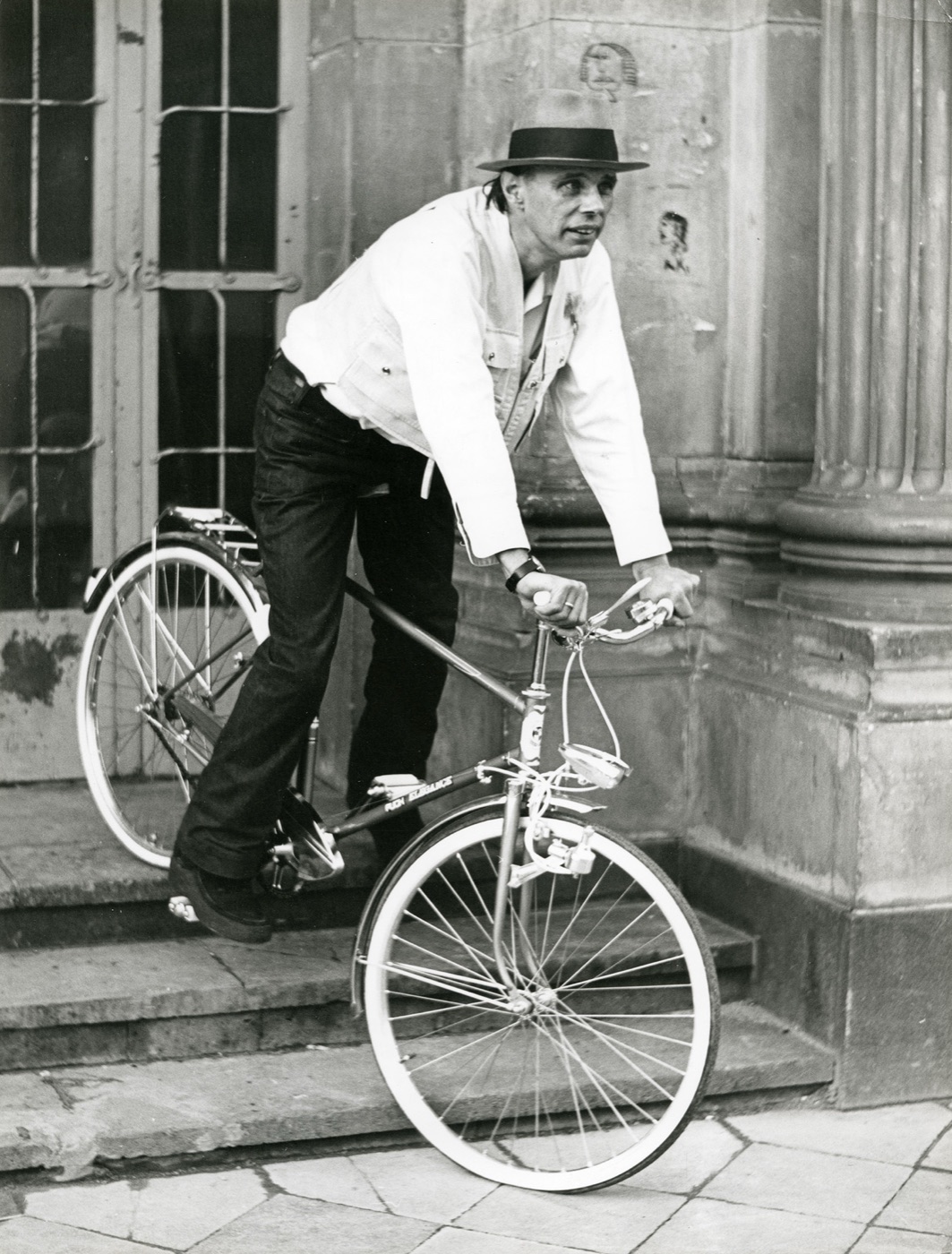
Düsseldorf’s scene was small, and it grew around the art academy, where Joseph Beuys taught. The Creamcheese, a bar and gallery furnished by artists, staged performances with psychedelic music and experimental film, and Beuys was a regular. The two cities were linked from the start. Conrad Schnitzler, a pupil of Beuys, came to Berlin from Düsseldorf, ran the Zodiak club and played on Tangerine Dream’s first album. He was a friend of Kraftwerk in his Düsseldorf days, and remembered getting them a small EMS synthesizer.
Ralf Hütter and Florian Schneider met as students at the Robert Schumann Hochschule, the city’s music conservatory. They were first heard in a quintet, Organisation. Reference books hear its only album, Tone Float (1970), as close to Pink Floyd and early Tangerine Dream. Then they took an empty room in a workshop in Düsseldorf, and called it Kling Klang. “We had our room, our concept,” Hütter said. The concept was electronically produced folk music from the Rhine and Ruhr. The band worked in that room for some forty years.
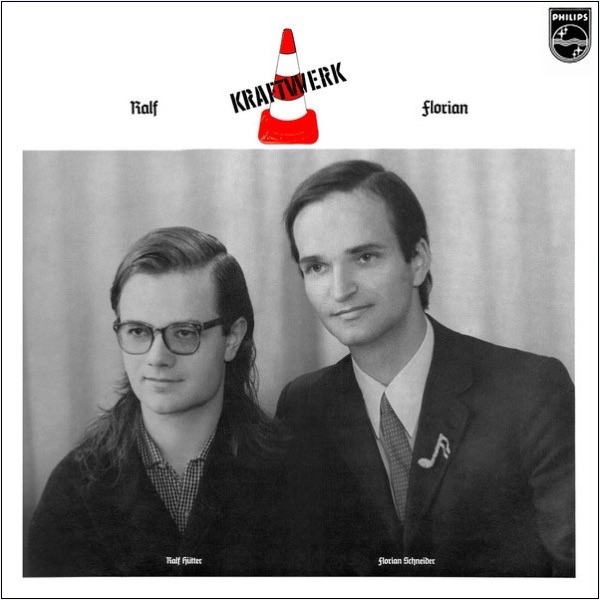
Their first two albums, Kraftwerk (1970) and Kraftwerk 2 (1972), sound nothing like the Kraftwerk most people know. They are improvisations on guitar, organ, flute and violin, treated with tape, and there isn’t a synthesizer on the first. Michael Rother and Klaus Dinger played in the early line-ups. In 1971, while Hütter was away for some months finishing his architecture studies, Schneider worked with the two of them as a trio. Rother remembered the concerts as primitive and wild: “in the end everything flew apart”. With Ralf & Florian (1973) the synthesizers and drum machines came in. The band now leaves its first three albums out of its official catalog, but for listeners coming from Berlin the third is the place to begin: small, playful electronic landscapes, loosely improvised, with a minor-key German melody already set against mechanical rhythms.
Press ▶ in the player to start.
This video can’t be played here. It may be blocked where you are, or no longer available. Try it on YouTube ↗
Listen
Kraftwerk, Ralf & Florian (1973)
Listen for: small, loosely improvised electronic landscapes, close to the Berlin groups, with a minor-key German melody set against mechanical rhythms.
Full piece on YouTube ↗Playing loads this video from YouTube (Google); Google’s privacy policy applies.
The engineer between them
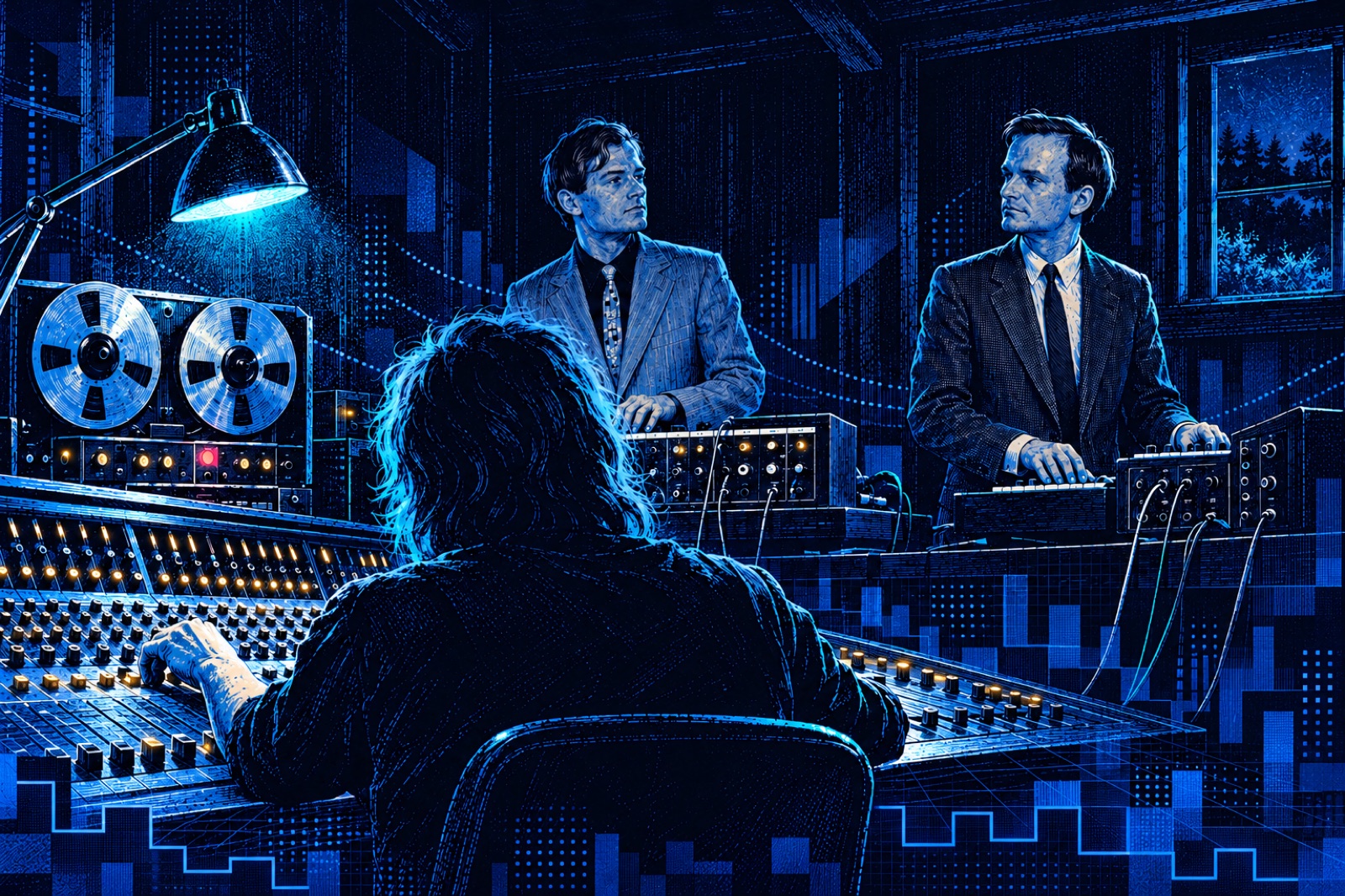
One man tied the two scenes together. Conny Plank engineered the first Ash Ra Tempel album in 1971, produced the first two Cluster albums, recorded Neu! and co-produced Kraftwerk’s first four albums, so that records from both camps shared one sound engineer. Reetze thought the half-formed ideas floating around Düsseldorf needed someone like Plank to turn them into albums that would sell. Plank worked in Hamburg and Cologne, so much of the Düsseldorf sound was made elsewhere. The two scenes shared a record label too: Brain, founded in Hamburg in 1972, released Neu!, Cluster and Harmonia and the solo records of Schulze and Edgar Froese.
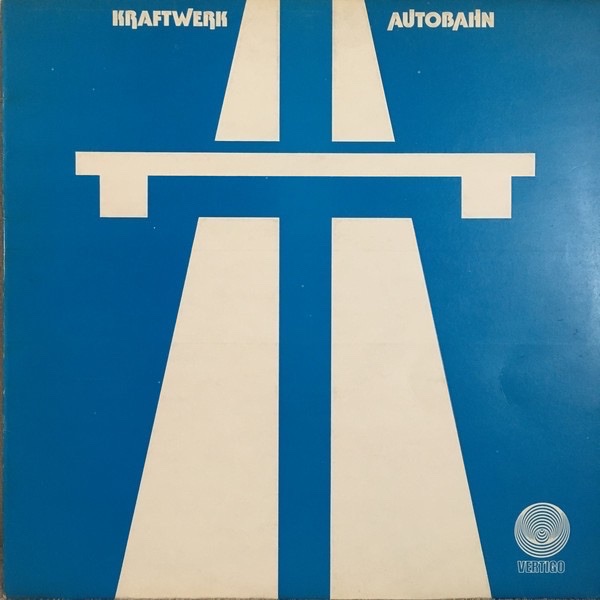
Plank’s last record with Kraftwerk was the one that made them. Autobahn (1974) was recorded at his new studio in Wolperath. Hütter and Schneider had added a Minimoog and an EMS synthesizer, and the title track fills a whole side, twenty-two and a half minutes of a journey, with sung words, a melody and a motorway of changing sounds. Plank worked out the sound of the passing cars and added the delay to the synthesizer bass line. It is a long piece, like the Berlin ones, but a composed one, with a theme and a refrain.
Press ▶ in the player to start.
This video can’t be played here. It may be blocked where you are, or no longer available. Try it on YouTube ↗
Listen
Kraftwerk, “Autobahn” (1974)
Listen for: the theme and refrain in a twenty-two-minute piece, and the passing cars Plank worked out.
Full piece on YouTube ↗Playing loads this video from YouTube (Google); Google’s privacy policy applies.
The American label cut the title track to under four minutes, radio stations found the full version, and Autobahn reached No. 5 in the American album chart. Der Spiegel reported in May 1975 that half a million LPs and as many singles had sold in a few weeks. At home it went the other way. West German critics met the new electronic music with rejection or bafflement, and Hütter remembered that Germans laughed at them and that tours had to be canceled for lack of an audience. The Berliners knew the pattern. Their audiences, too, were abroad, in Britain and above all in France.
The parting with Plank was bitter. After the American deal for the single, Hütter and Schneider paid him 5,000 marks, and the sleeve credited him only as engineer. The English musician John Foxx remembered Plank saying he disliked the direction of Kraftwerk’s new image, which he thought too close to the Germany everyone else was escaping from. He never worked with the band again.
Concrete and cosmic
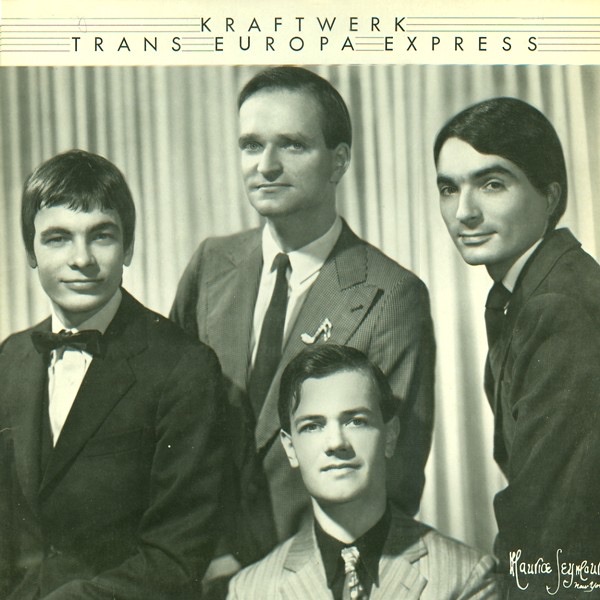
By the late 1970s the two sounds were easy to tell apart. With Trans-Europe Express (1977) Kraftwerk dropped its last acoustic instruments. Its machine rhythms ran on a sequencer that the Bonn firm Matten & Wiechers built for the band in 1976, after supplying Schulze in Berlin. The same small firm stood behind both sounds, but the two cities used its machines in different ways.
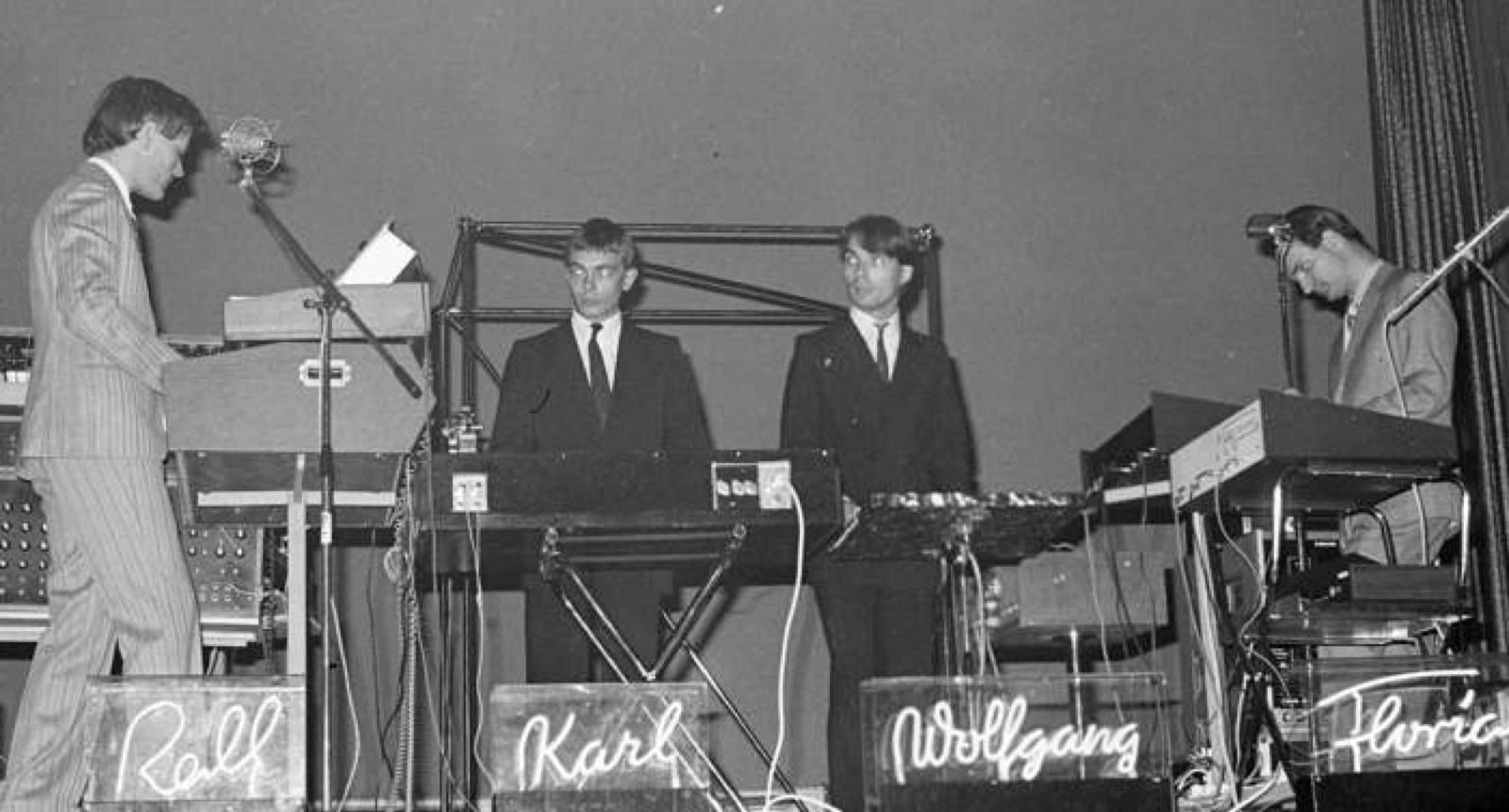
In Berlin the sequencer ran and the musicians improvised over it. Kraftwerk composed its patterns. By 1981, Hütter said, the music had become so complex that it had to be written down, though he insisted improvisation was still central, because “the fingers play themselves when you press record”. He called the four members Musik-Arbeiter, “musical workers”, who built their own studio, stage and instruments, and on stage they stood almost still. Kraftwerk’s subjects were the things around them: roads, radio, trains, robots, computers. An Italian study of the period put the difference in an image: where Tangerine Dream took the introspective and cosmic to its limit, Kraftwerk’s cosmos was earthlier, more optimistic and more dance-minded, the starships built to reach the nebulae that Tangerine Dream described.
Press ▶ in the player to start.
This video can’t be played here. It may be blocked where you are, or no longer available. Try it on YouTube ↗
Listen
Kraftwerk, “Trans-Europe Express” (1977)
Listen for: the composed machine rhythm, driven by a sequencer from the Bonn firm that had supplied Schulze.
Full piece on YouTube ↗Playing loads this video from YouTube (Google); Google’s privacy policy applies.
The musicians saw it the same way. The drummer Harald Grosskopf, who played with Schulze and Ashra, found the Berlin scene more alternative, a little freaked-out and hippie-like, and Düsseldorf finer and nobler, with Kraftwerk more technically minded. Tangerine Dream also came with a pile of technology, but its music felt more improvised and left more to chance. Thorsten Quaeschning of today’s Tangerine Dream says the Berlin bands of the 1970s were freer and more atmospheric, while the Düsseldorf musicians had studied music and worked more deliberately.
What they said about each other
Berlin was generous, and guarded. In 1974 Froese named Kraftwerk and Cluster as the German groups he liked most. In 1977 he said that Tangerine Dream knew Kraftwerk very well and loved a lot of what they had done, but that the music was not really similar: Tangerine Dream tried to keep things “much more serious”. Schnitzler, the old friend, found Kraftwerk too tight and too German for him. Schulze in 1988 thought them “something special”, “more for the in-crowd”, though he praised their early ideas, and in 1993 he said the pop imitators could never match Kraftwerk, which was “too good for them, and musically too tricky”.
Düsseldorf listened back. Kraftwerk’s drummer Wolfgang Flür listened to Tangerine Dream and Schulze alongside Can, Cluster and Pink Floyd. But nobody wanted to be in anyone else’s camp. Rother said that Neu!, Kraftwerk and Harmonia never wanted to belong to a team and preferred to be “on our own island”.
Neu!, and the bands in between
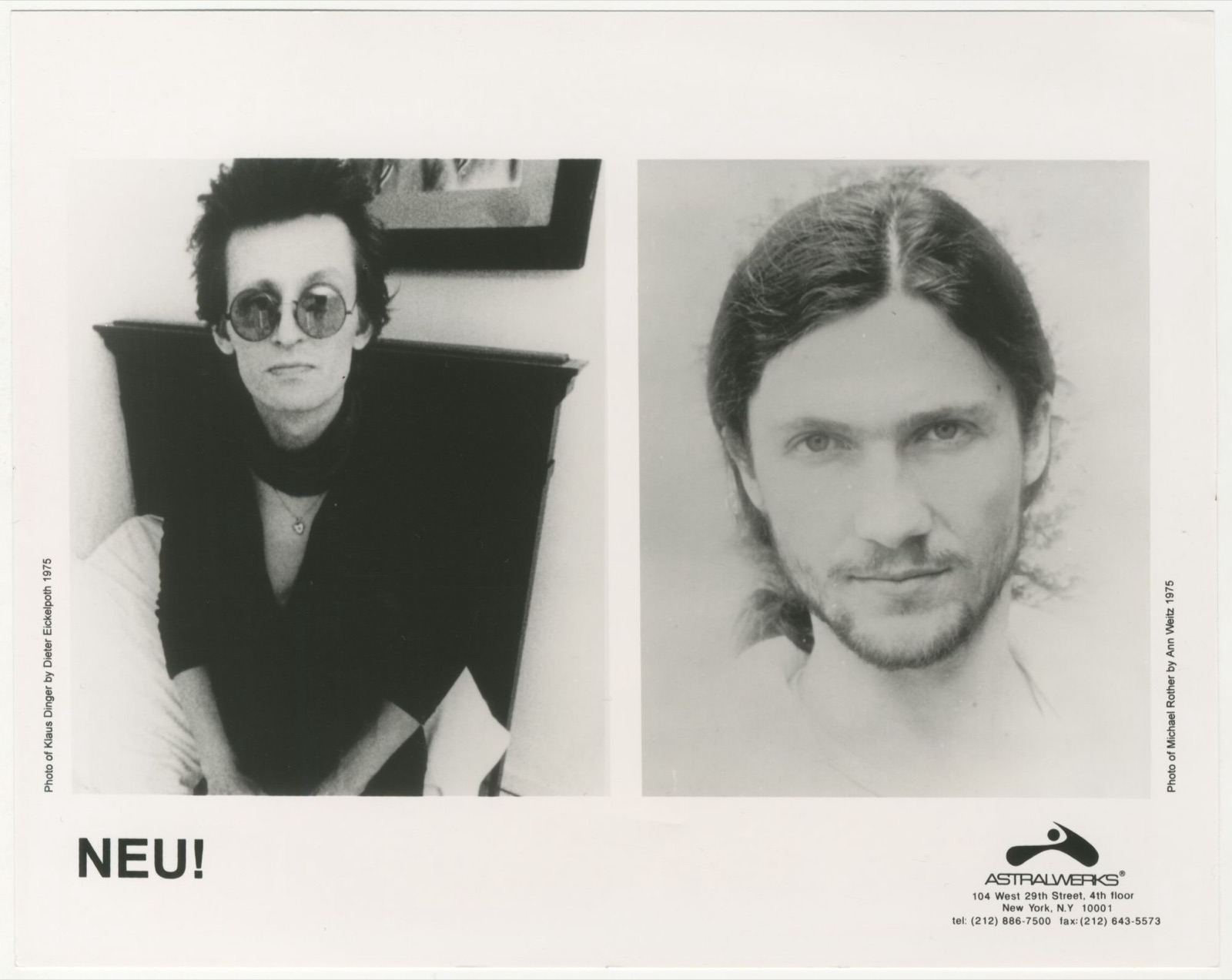
Kraftwerk was the center of the Düsseldorf scene, and the other bands formed around it or split from it. Rother and Dinger left to form Neu!, and made three albums with Plank between 1972 and 1975, built on Dinger’s straight, relentless drumming, Rother’s guitar and Plank’s work with tape. The first has no synthesizer at all. Dinger’s beat was later called “motorik”, a word that both he and Reetze dislike. His next band, La Düsseldorf, with his brother Thomas and Hans Lampe, wanted voices and songs. Its first album, Düsseldorf (1976), produced by Plank, gave it hits in discos and on the radio, and David Bowie called La Düsseldorf “the soundtrack of the eighties”.
Press ▶ in the player to start.
This video can’t be played here. It may be blocked where you are, or no longer available. Try it on YouTube ↗
Listen
Neu!, Neu! (1972)
Listen for: Dinger’s straight, relentless drumming under Rother’s guitar, with no synthesizer at all.
Full piece on YouTube ↗Playing loads this video from YouTube (Google); Google’s privacy policy applies.
One band belonged fully to neither city. Cluster, which grew out of Kluster, the Berlin group Hans-Joachim Roedelius and Dieter Moebius had founded in 1969 with Schnitzler, moved to the village of Forst in 1972. In 1971 Cluster and Kraftwerk, with Rother and Dinger, shared a bill in Hamburg, where, Rother remembered, the audience rushed the stage during Cluster’s soft set. Reetze hears parallels between early Cluster records and passages on Kraftwerk’s first three albums, and more striking ones between Cluster’s Sowiesoso and the quiet pieces of Ralf & Florian and Autobahn: their melodies differ, but the ideas behind them are alike. “Waves were swinging between Düsseldorf and Forst,” he wrote.
In 1973 Rother went to Forst to ask Cluster to help play Neu! live, stayed, and formed Harmonia with Roedelius and Moebius. The 1980 handbook put the middle ground in a line: Neu!, early on, was the musical link between Tangerine Dream and Kraftwerk, and Harmonia joined meditative sounds to motoric rhythm.
Some musicians tried deliberately to join the two. The Düsseldorf musician Wolfgang Riechmann made Wunderbar (1978), which the head of his label heard as “a balancing act between the Berlin and the Düsseldorf electronic scene”, the spherical sounds of Tangerine Dream and Schulze joined to the minimalism of Kraftwerk and Neu!.
Where the line blurs
The line was never clean. In Reetze’s words the musicians belonged to “a biotope of creative people who all knew and influenced each other”. Rother and Dinger had played in Kraftwerk; Hans Lampe, Plank’s assistant, drummed for Neu! and La Düsseldorf; Kraftwerk in its early years sometimes jammed with Can from Cologne. The cliché of improvised Berlin against constructed Düsseldorf is partly a later view. Kraftwerk’s first records were improvised and hardly electronic, and the Berliners moved toward rhythm and composition in their turn: by Force Majeure (1979) Tangerine Dream had a real drummer. Even the question of who came first is argued. German accounts often say that Kraftwerk invented electronic music in Düsseldorf, but the journalist Christoph Dallach points out that, by release dates, electronic music was being made in Berlin first.
The two cities also shared a break with convention: in Düsseldorf and Berlin alike, small underground communities broke up the three-minute song and the standard line-up of guitar, bass and drums. Rother said he reached a point where he wanted to overcome the English-language music he had admired, to find his own identity. Dallach finds the same urge to “start at zero” in Berlin, Düsseldorf, Munich and Hamburg. Schulze said in 1993 that Kraftwerk, he himself and Tangerine Dream were among the few who had worked with electronics “against a lot of opposition and laughter”.
Back to the main storySection 5, “A sound with a name”, after the Berlin and Düsseldorf passage ←