
Companion story
Klaus Schulze: the long view back
In 2017, between summer and autumn, Klaus Schulze went back into his studio. It was a small room, about ten square meters, in his house deep in the forest at Hambühren, on the edge of the Lüneburg Heath, and most of his vast output had been made there. He had been ill. He had kidney disease that needed dialysis, and he turned seventy that August while recovering from a long stay in hospital. He had come to realize, as he said the next year, that he was better off not going out on the road anymore. So he did the next best thing. He played the new album as if it were a concert, most of it straight through, in one streak. It was, he said, “not too bad an alternative after a long, silent break.”
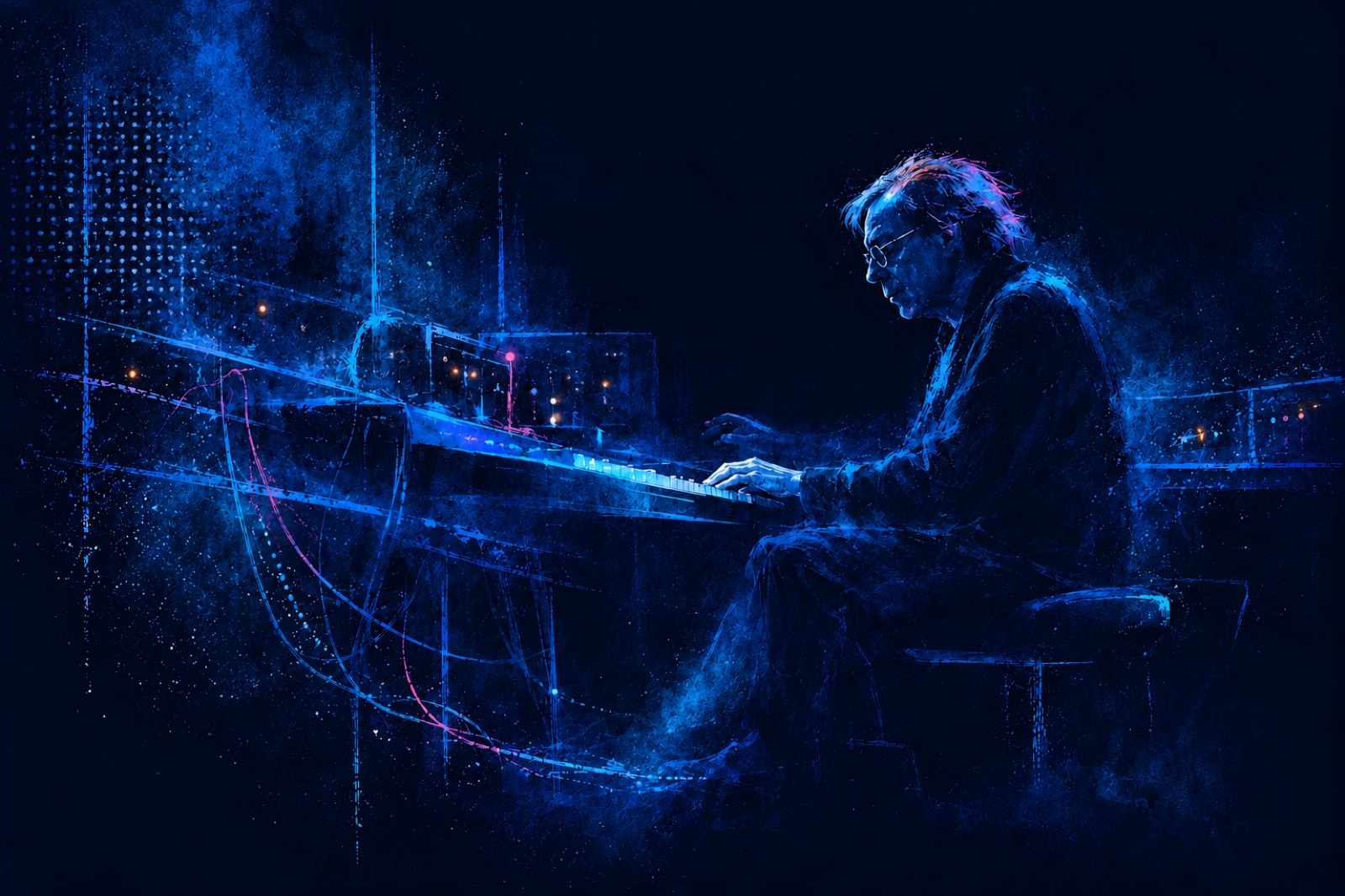
The record was Silhouettes. Four years later came Deus Arrakis, the last album he finished. Between them they made a late return. Silhouettes reached the German album chart, and Deus Arrakis grew out of his part in an Oscar-winning film score, which sent him back to the subject of one of his best-known records.
The last concerts
Schulze had always been a performer. In more than forty years he gave about 350 concerts in sixteen countries. The last were two solo evenings in Tokyo, on 20 and 21 March 2010, the first he had ever played in the Far East. A Japanese fan, Gen Fujita, had invited him, and a Japanese crew rebuilt for the occasion the whole setup he had so often used in Europe. The recordings came out that year as Big in Japan; one of its long pieces reworks his old “Crystal Lake”. The German site RockTimes found the music “refreshingly old-fashioned”: long pieces that drift from calm into sequencer cascades which, as the reviewer put it, could with a little souping-up have played in any techno club.
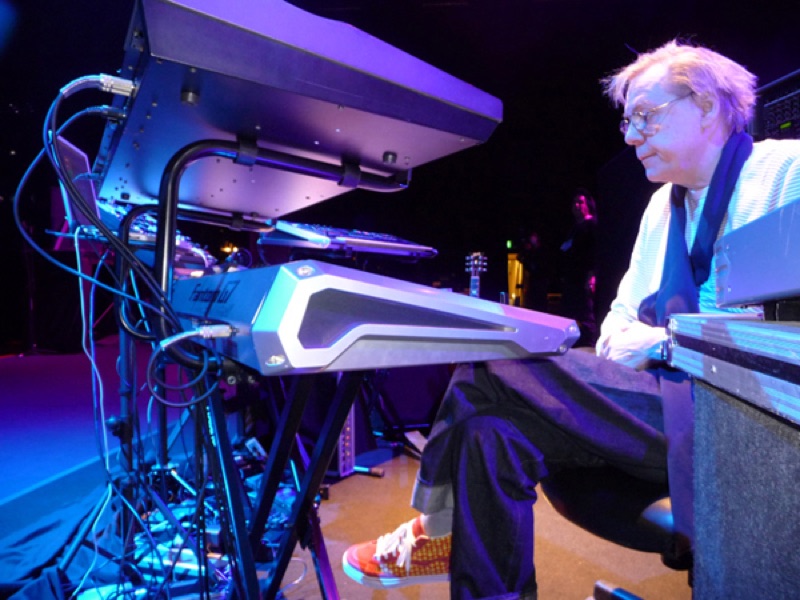
In 2013 he said in a radio interview that he would give no more concerts. The news hit his fans hard; his biographer Olaf Lux wrote that everyone had somehow hoped to see him on stage again. One more concert was planned all the same, for 9 June 2016 in Szczecin, in Poland, and it sold out. In April it was canceled on medical grounds. When Tangerine Dream heard how ill he was, they agreed at once to play in his place, in a concert in honor of Edgar Froese, who had died the year before. The tickets for Schulze’s concert stayed valid. So the band he had drummed for in 1969, which had carried on after Froese’s death, took his place for the evening.
The album that wasn’t there
His last studio album had come out early in 2013, and no new one followed for five years. By 2015, Lux wrote, the fans had little news of Schulze or his health, and everyone had been waiting, without quite admitting it, for the announcement that he had retired.
Instead, a member of a German Schulze fan forum, living in Hong Kong, found a new album listed on the Japanese Amazon site. It was called Silhouettes, and the listing had everything: a cover picture, a price, a list of selling points for dealers and three track titles, “Shades of Fantasy”, “Shades of the Past” and “Shades of Today”. Lux asked the record label, SPV, and an employee there confirmed that an album of that name, with new material, was coming, though he didn’t know when. It was announced for 31 March 2015, then for the end of the year, and then it vanished. Schulze’s publisher dismissed the whole thing as “some idiot’s joke”. Lux supposed the publisher was simply annoyed that someone had leaked an album Schulze hadn’t really started working on.
In 2017 a double CD marked his seventieth birthday, Eternal: The 70th Birthday Edition, with known pieces and unreleased ones from his archive. Then, in December, his official website broke the news: “I have just heard the new album by KS! Yes, there will be one!” It had four long tracks, the site said, and “his loyal fans who have grown old with Klaus and his music will love it.”
Silhouettes
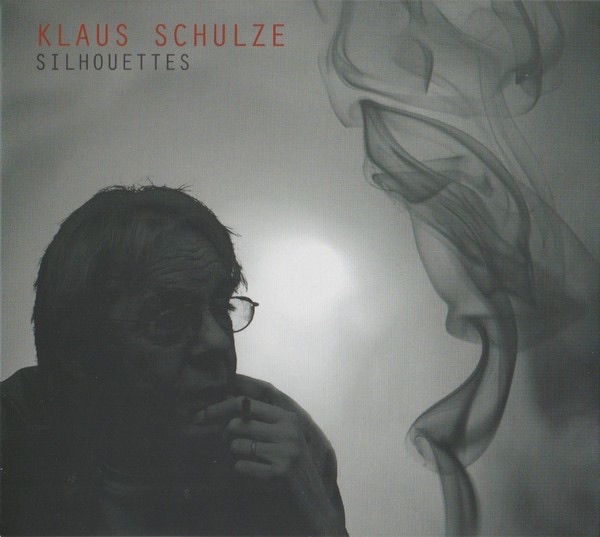
Silhouettes came out on 25 May 2018. The cover was the black-and-white photograph of Schulze smoking that had appeared on the mysterious listing three years earlier. The four titles were new: “Silhouettes”, “Der Lange Blick Zurück” (“The Long View Back”), “Quae Simplex” and “Châteaux Faits De Vent”.
The label’s announcement said the music reflected a long period that had been very quiet because of his health, and so was in parts highly meditative. Schulze called it a “reduction to the essential”, and said he had used solo and vocal parts only sparingly. “No great distractions, nothing necessarily focusing, no great effects or gimmicks, no frills or dominant rhythms. My aim was to paint the pictures in the depth of the surfaces, the sound fields of tension and mood.”
The title piece opens the album. His website called it “a melancholic, soft, environmental sound piece”, and Lux heard in it the deep atmospheres of Schulze’s Hacker soundtrack.
Press ▶ in the player to start.
This video can’t be played here. It may be blocked where you are, or no longer available. Try it on YouTube ↗
Listen
Klaus Schulze, “Silhouettes” (2018), from the beginning
Listen for: the “melancholic, soft, environmental sound piece” his website described, with no dominant rhythm.
Full piece on YouTube ↗Playing loads this video from YouTube (Google); Google’s privacy policy applies.
The other three pieces bring back the sequencers, in what the website called “the ‘old-fashioned’ Schulze way”, and Lux was glad to find more fine sequencer passages than he had expected. “Der Lange Blick Zurück”, the longest, at twenty-two minutes, ends in what the site called “a great finale”. The writer David Stubbs heard the album moving between “richly-coloured ambient swirl and impressive mega-structures made up of rigid sequencer girders”.
Press ▶ in the player to start.
This video can’t be played here. It may be blocked where you are, or no longer available. Try it on YouTube ↗
Listen
Klaus Schulze, “Der Lange Blick Zurück” (2018), the closing minutes
Listen for: the sequencers in the finale.
Full piece on YouTube ↗Playing loads this video from YouTube (Google); Google’s privacy policy applies.
Stubbs interviewed him by email for Electronic Sound, in a piece published that June. Schulze, “now 70”, had “recently faced his own mortality”, Stubbs wrote, though he was recuperating. “I am in fact quite well now,” Schulze told him, “and very happy about the opportunity to continue with my music again after all these years.” He didn’t oversell the record. “The result may appear to be unspectacular at first sight,” he said, “but as with a microscope or a cosmic telescope, the evident should not really be what matters. Because there are levels in music that you can almost touch, that walk through the room.” First, he added, you had to let the noise in your head calm down, so that the music behind it became audible.
He had never worked from a plan. “I never have any plans or concepts before I start a new album,” he told Stubbs. “I just play and hit that record button.” The house in the forest helped. “The silence and isolation here, or let’s say my cocooning, helps me to focus on music and to be more creative,” he said. “Don’t forget, before that I had many long years of the ‘big city life’.”
For Stubbs, Silhouettes was “an impressive feat of musical strength”, a record that posited “a notional, healthy future for the genre that is destined to outlive its creators”.
Lux found the response largely positive. Magazines that had marked Schulze’s seventieth birthday the year before reviewed the new album too, and others that had missed the birthday made up for it with full-page features. Silhouettes reached No. 32 in the German album chart, which Lux called a remarkable success for a purely electronic record. Even Der Spiegel, which forty years earlier had described Schulze and his colleagues as “shamans at the synthesizer” making an “acoustic wasteland”, gave him a friendly interview.
Lux ended his biography of Schulze, published in 2020, by asking whether Silhouettes would be the last album. His answer was “Certainly not.” Schulze had nothing left to prove, Lux wrote, and like many people over seventy he had good days and bad days; but his studio was in his house, and he didn’t even have to take off his slippers to get there. “Anything is possible.”
Dune again
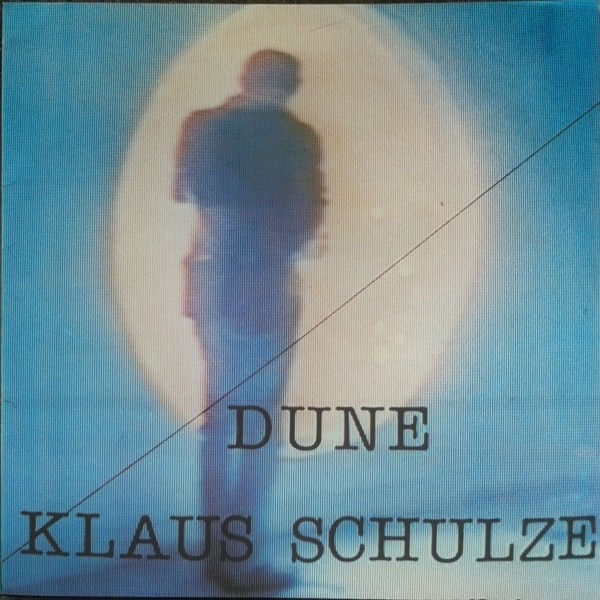
The last album began with a film. In 1979 Schulze had made an album called Dune, after Frank Herbert’s novel, which he once said was “like a Bible” to him. He remembered “a vague offer to do the soundtrack for the movie” that came to nothing, so he recorded two long pieces of his own instead. On the first, the cellist Wolfgang Tiepold played over slowly rising synthesizer textures. The year before, on his album X, Schulze had already named a piece “Frank Herbert”.
More than forty years later Hans Zimmer was writing the score for Denis Villeneuve’s film of Dune (2021). “When I was writing the end titles, I realized there was a bass line that I’d heard before,” Zimmer said. “And I suddenly remembered that Klaus Schulze wrote a song called ‘Frank Herbert’. I basically lifted the bass line from that. So I phoned Klaus and asked him, could we make this a co-composition?” Schulze, Zimmer said, “was quite thrilled that something he wrote so many years ago still echoed into this century.” The end-titles piece became “Grains of Sand”, on Zimmer’s Dune Sketchbook.
“We got on well from the start,” Schulze wrote, “just like me, Hans also is a huge fan of Dune, and the result indeed ended up being in the movie. Truly incredible how sometimes circles open up, cross and then close again in the end.” Zimmer called Schulze’s work “the perfect balance between the soul and technology”, and Schulze himself “a master, an influence and influencer on countless others”. The score won an Academy Award in 2022.
Deus Arrakis
The film wasn’t the end of it for Schulze. “I was caught again by the deserts of Dune and needed more ‘spice’,” he wrote. “Excitedly I returned to my studio and found a cello recording by Wolfgang Tiepold. From there I felt completely unleashed and just played and played.”
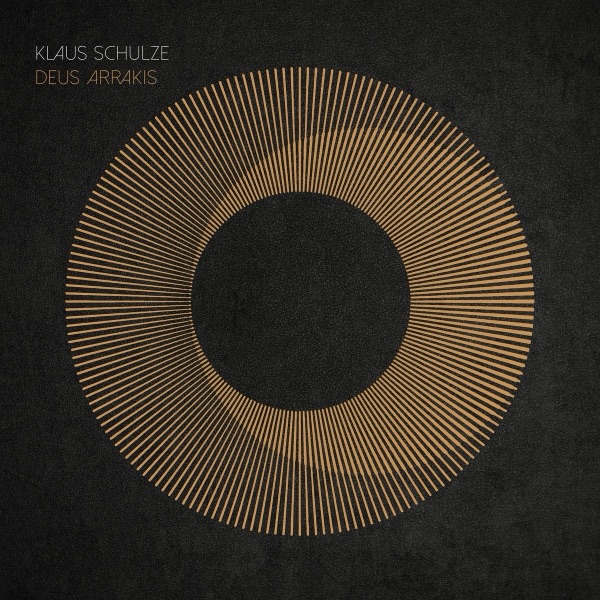
He recorded the album in 2021 and 2022 in his studio at Hambühren, with Tom Dams producing and engineering. Tiepold’s cello came from the archives, an old recording that had never been used, and the singer Eva-Maria Kagermann added her voice. He called it Deus Arrakis, Latin for “god of Arrakis”, the desert planet of Herbert’s novel. Two of its three long suites are named after Egyptian gods: Osiris, and Seth, the god of chaos, desert and darkness, who killed him. The third is called “Der Hauch des Lebens”, “The Breath of Life”.
To Steve Krakow of the Chicago Reader, the album went back to Schulze’s “pure-synth space daze”. “Osiris” sets layers of cosmic keyboard melody against phased waves of sound. “Seth”, thirty-two minutes long, is the most experimental: it opens like “being stuck in a sandstorm”, in Krakow’s words, settles into a slow, ceremonial stream of ambient cascades, and then gives way to rhythmic synthesizer patterns that recall Timewind. Tiepold’s cello is heard here. One listener, hearing the strings in its fourth part, wrote that it felt “almost like a funeral is being held in space”.
Press ▶ in the player to start.
This video can’t be played here. It may be blocked where you are, or no longer available. Try it on YouTube ↗
Listen
Klaus Schulze, “Seth” (2022), from the entry of the rhythmic patterns
Listen for: the rhythmic synthesizer patterns that Krakow heard as recalling Timewind.
Full piece on YouTube ↗Playing loads this video from YouTube (Google); Google’s privacy policy applies.
“Der Hauch des Lebens”, nearly half an hour long, is the most purely ambient of the three. It moves, Krakow wrote, “between realms of pure bliss and darker terrain”. Kagermann’s wordless voice is heard in its second part.
Press ▶ in the player to start.
This video can’t be played here. It may be blocked where you are, or no longer available. Try it on YouTube ↗
Listen
Klaus Schulze, “Der Hauch des Lebens” (2022), part two
Listen for: Kagermann’s wordless voice.
Full piece on YouTube ↗Playing loads this video from YouTube (Google); Google’s privacy policy applies.
The album was announced that spring, and in early April a first excerpt, from “Osiris”, came out. A few weeks later, on the evening of 26 April 2022, Schulze died, at seventy-four. His son Maximilian and the label said he had died after a long illness, but suddenly and unexpectedly. To the end, the Swiss broadcaster SRF wrote, he had been working on his long, hypnotic compositions, pieces with titles like “Osiris” and “Der Hauch des Lebens”. The album came out that summer.
Some listeners have taken it as a requiem. For Krakow, who heard Schulze “newly energized”, the last suite was “as fitting an epitaph as an artist has ever laid down”, and its title felt like Schulze acknowledging his mortality. Schulze had described it differently. “At the end of that second private Dune journey I realized,” he wrote: “Deus Arrakis became another salute to Frank Herbert and to that great gift of life in general.”
Lux had been right: Silhouettes was not the last album. In 1975 Schulze had played Timewind live onto tape in his Berlin bedroom. He made Deus Arrakis in another small room of his own, and by his own account he just played and played.
Back to the main storySection 10, “A change of cosmic address”, after Zimmer’s Dune ←